Locations: Estonia, Haapsalu
(e)motion
Exhibition Spatial in Evald Okas Museum
Haapsalu, Estonia
Summer 2014
Curator/designer: Mara Ljutjuk
Coauthor: Ralf Lõoke
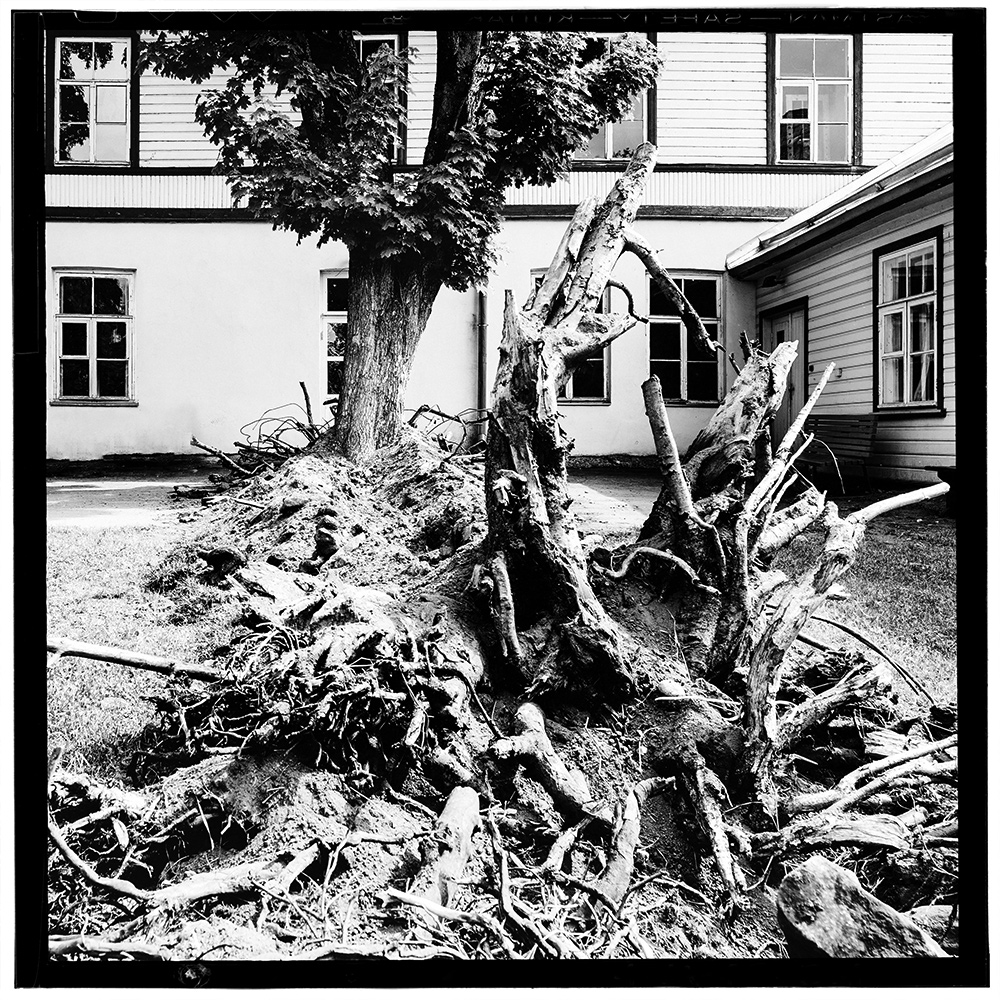
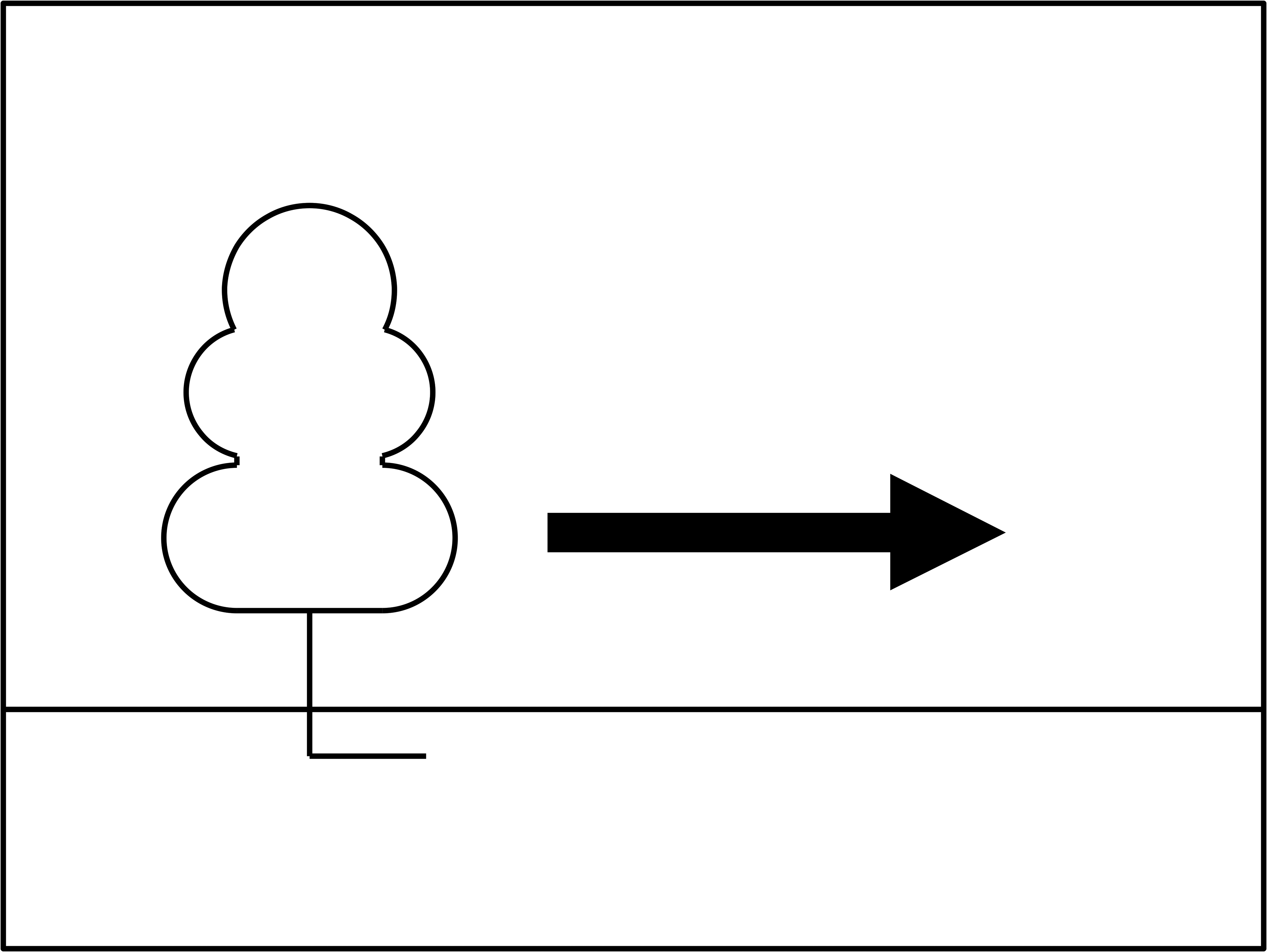
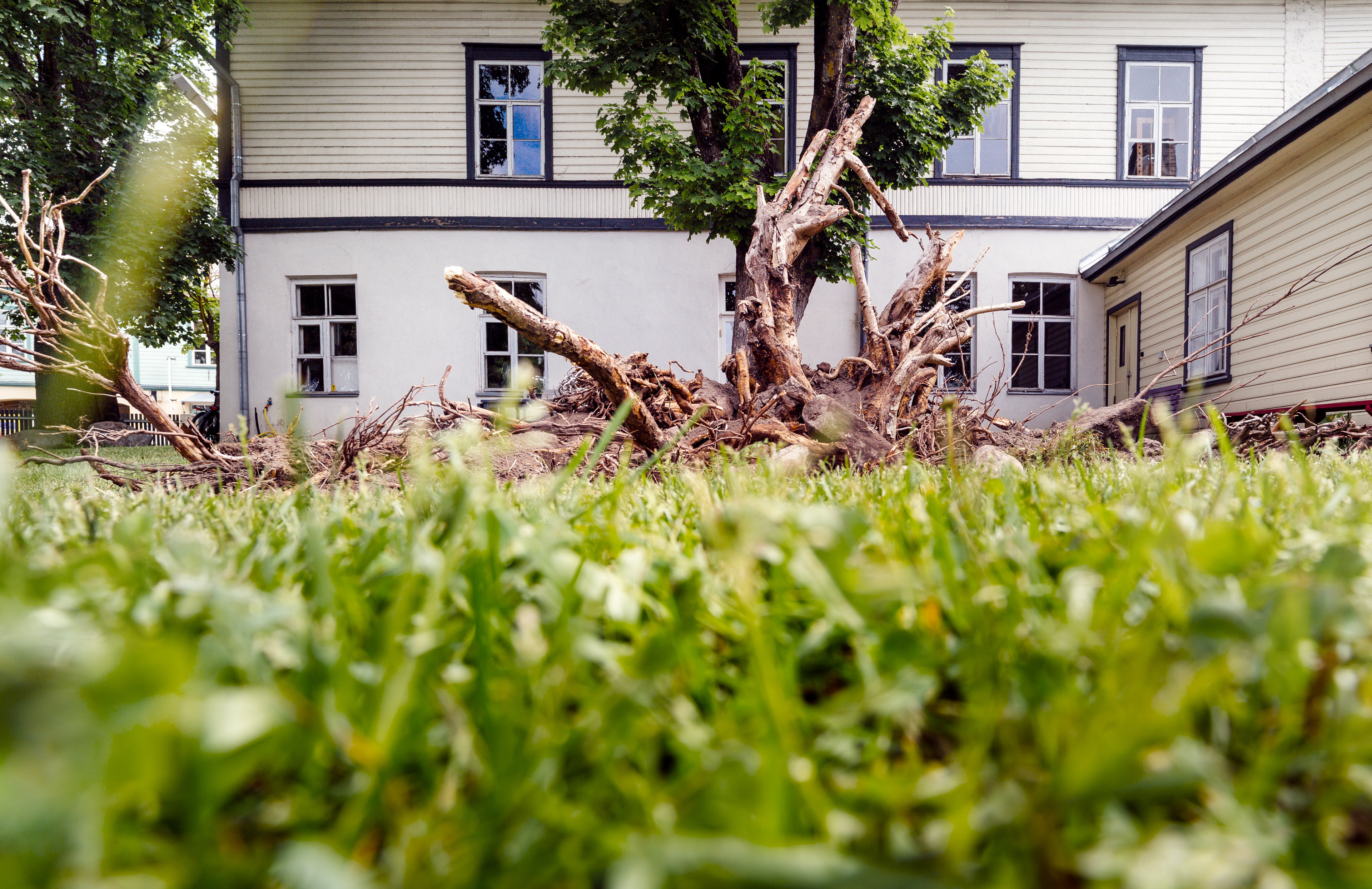
In the summer of 2014, the installation (e)motion was included in a group exhibition at the Evald Okas Museum in Haapsalu, Estonia. Conceived by architects Ott Kadarik and Ralf Lõoke, the project refrained from introducing a new object into the exhibition space. Instead, it enacted a deliberate and irreversible spatial intervention by physically relocating a mature tree in the museum courtyard, a tree originally planted by Evald Okas in the mid-1950s.
The project emerged from a seemingly straightforward yet fundamentally architectural inquiry: must a landmark remain fixed in its historically assigned position, or can its meaning be redefined through spatial displacement? Over time, the tree had acquired symbolic value but had become spatially ambiguous, remaining present yet largely overlooked. (e)motion neither removed nor monumentalized the tree; instead, it made its significance visible through relocation.
 The relocation was not framed as a performative gesture or symbolic act. Instead, it was executed as a comprehensive construction process that required detailed planning, heavy machinery, and specialist expertise. The gradual and public unfolding of the tree's movement allowed the process itself to become integral to the work. As a result, the emphasis shifted from the final outcome to the decision-making, the act of movement, and the acceptance of risk inherent in intervening within a living system.
In its new location, directly in front of the gallery entrance, the tree functions as an explicit spatial marker. No longer a background element within the landscape, it now commands attention and recognition. As a living organism, the tree introduces a temporal dimension into the institutional context of the museum, one that exceeds exhibition schedules, curatorial cycles, and architectural authorship. The tree continues to grow, unaffected by the surrounding cultural programs.
(e)motion operates within the ambiguous territory between architecture, landscape, and artistic intervention. Rather than introducing new material to the site, it reorganizes existing elements. The work raises questions of authorship and heritage: to whom does spatial memory belong, and who possesses the authority to reinterpret it? Is a tree planted by an artist an untouchable relic, or a living component of an environment that must adapt to evolving use?
The title (e)motion intentionally shifts between the concepts of movement and emotion. The physical displacement inevitably elicits emotional responses such as discomfort, resistance, or approval, thereby revealing the affective dimension of spatial change. The work operates within this tension. Rather than offering judgment, (e)motion establishes a context in which a concrete architectural act initiates broader discussions on memory, responsibility, and the mutability of place.
The relocated tree is neither a monument nor an installation in the conventional sense. Instead, it stands as a living reminder that even seemingly permanent landmarks are provisional, and that architectural agency can manifest not only through addition but also through displacement.


© Ott Kadarik
insta: @kodarik @luidrik @ktarchitects