Locations: Estonia. Tammsaare Park Year: 2121
The Waste Temple
The project is exposed at the exhibition in the Estonian Museum of Architecture 21.06-21.11.2021 - https://www.arhitektuurimuuseum.ee/en/naitus/the-house-that-we-need/
Curator: Jarmo Kauge
Coauthors: KTA: Mihkel Tüür, Indrek Rünkla;
Tallinn, Estonia
Spring 2021
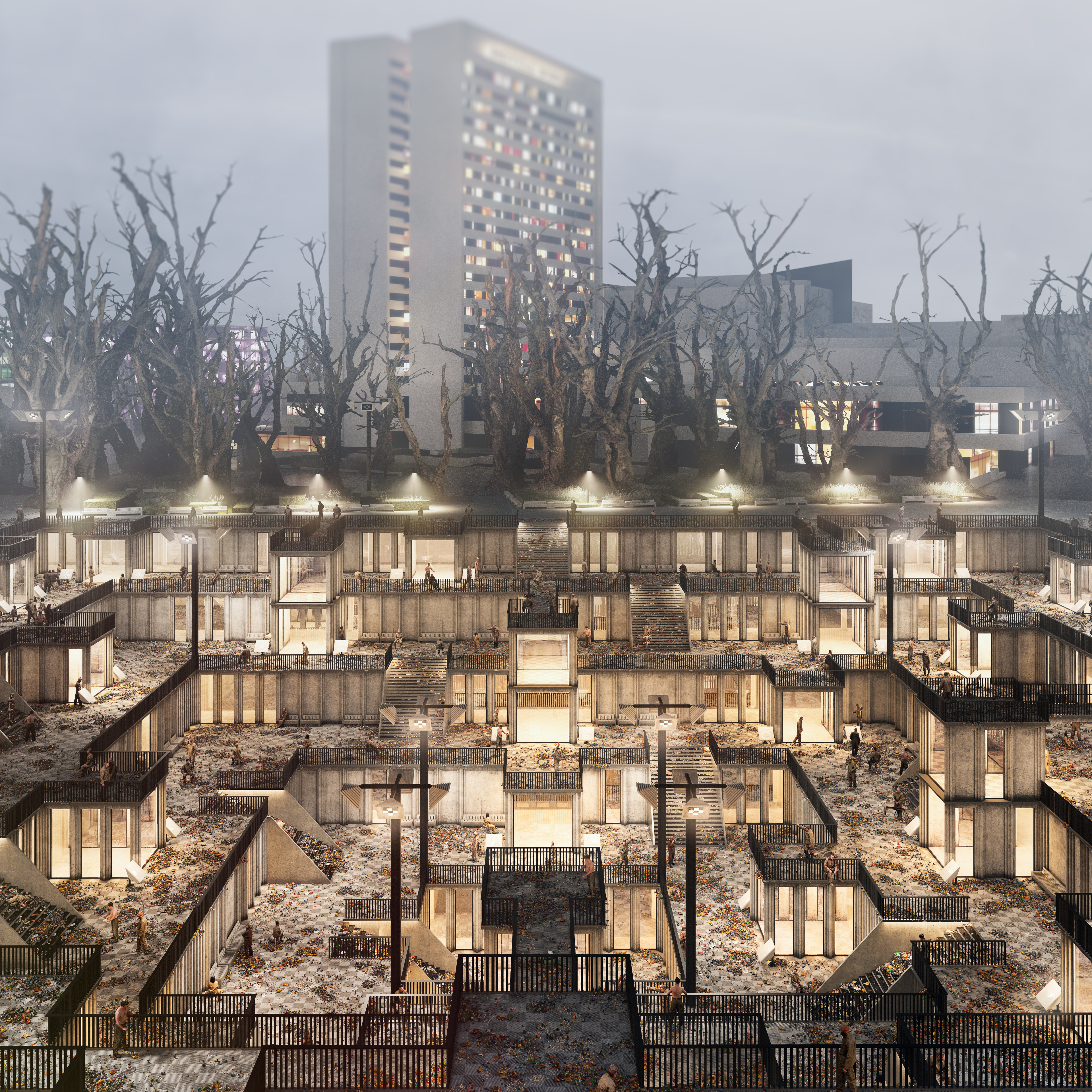
The Waste Temple is a speculative architectural project by Kadarik Tüür Architects that reconceptualizes material waste as a cultural and spatial responsibility extending across millennia, rather than as a hidden inconvenience. The project advocates a fundamental transformation in which waste is no longer relegated to the margins of society but is instead positioned at its symbolic and architectural center.
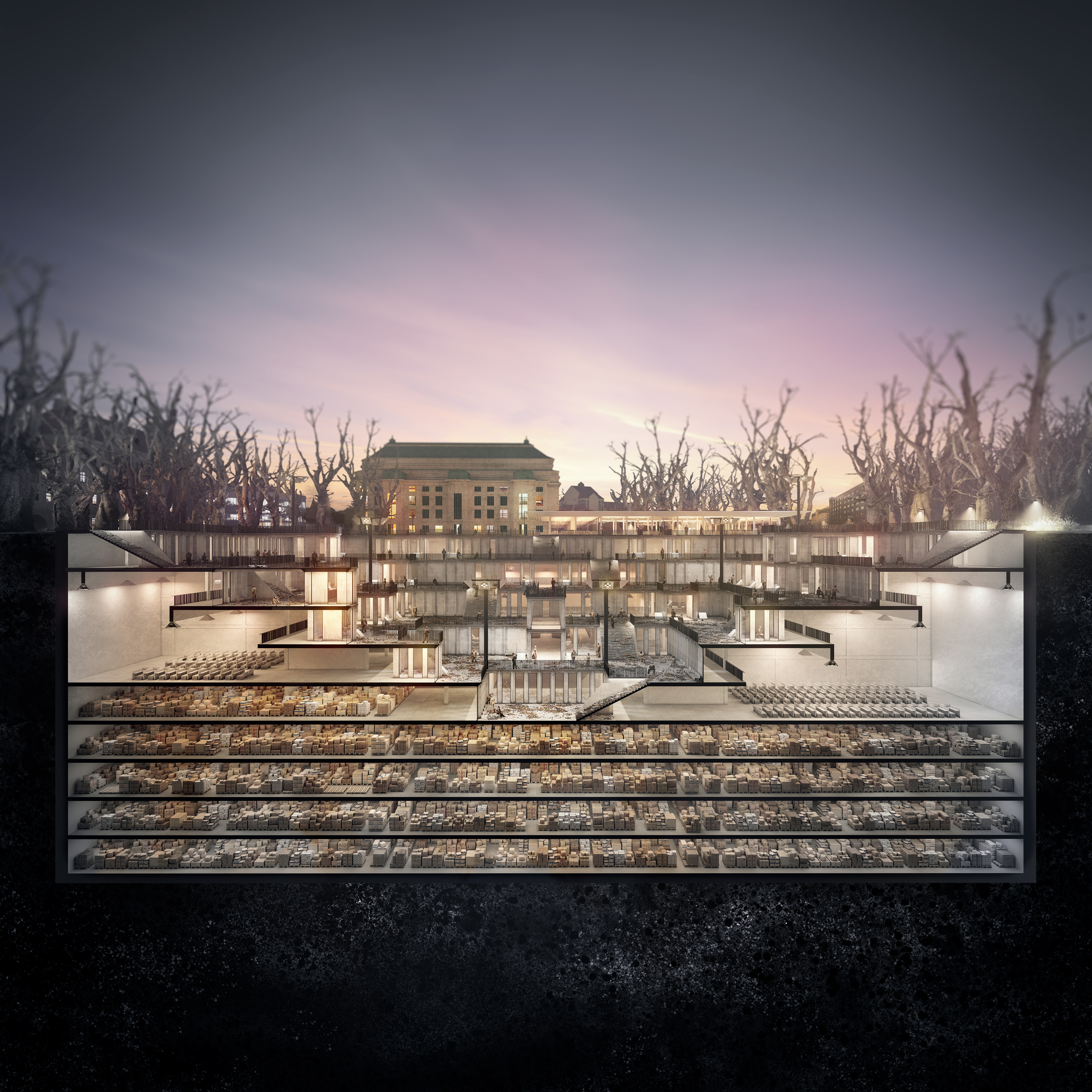
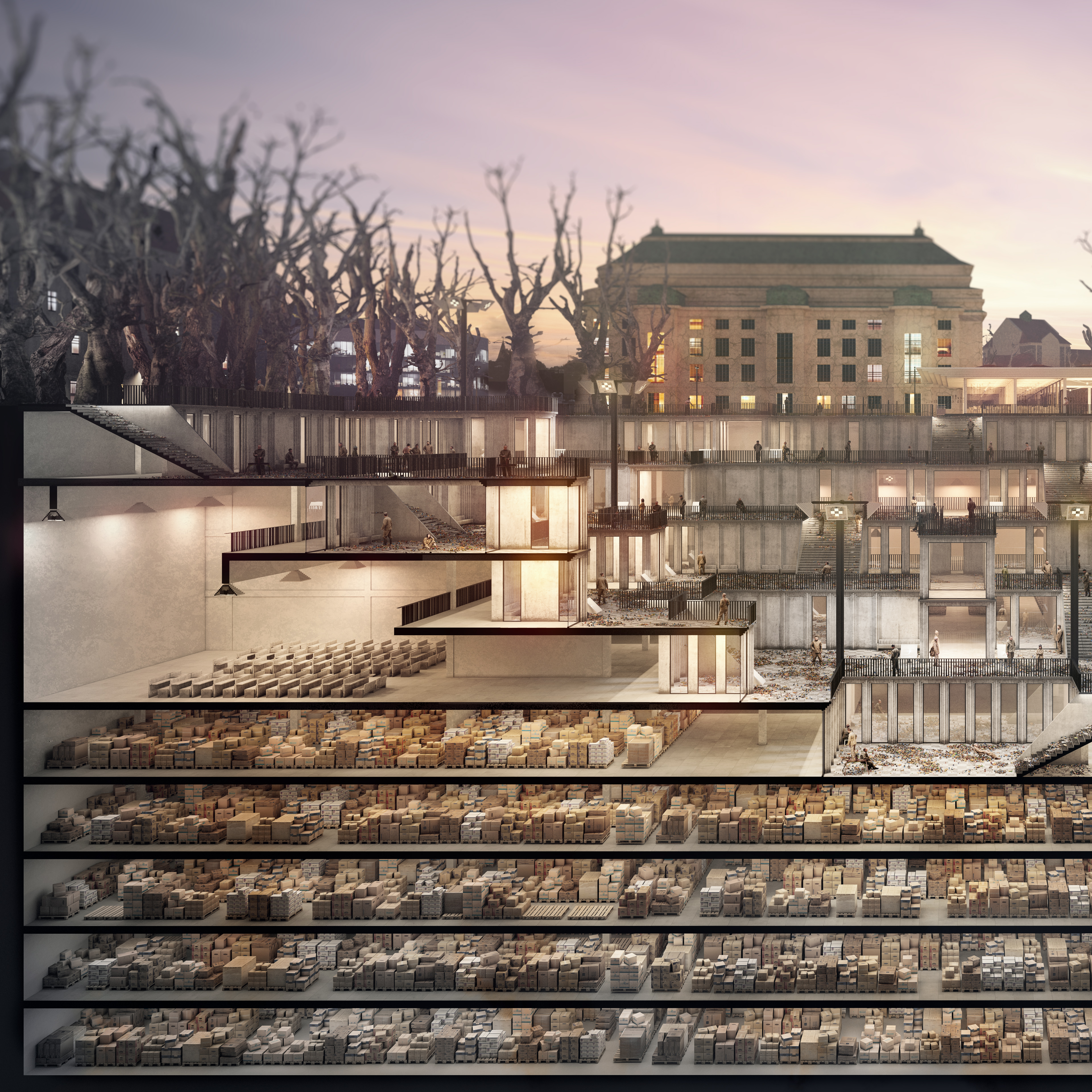
Central to the proposal is a network of waste depositories envisioned as future quarries. These structures are designed to store the by-products of contemporary consumption for future generations, with the expectation that partially decomposed materials may eventually attain new value. Instead of designating landfills as areas of exclusion, the project recommends situating them in locations intended for future habitation. Consequently, waste distribution is reframed as a strategy for long-term regional planning that influences future settlement patterns.
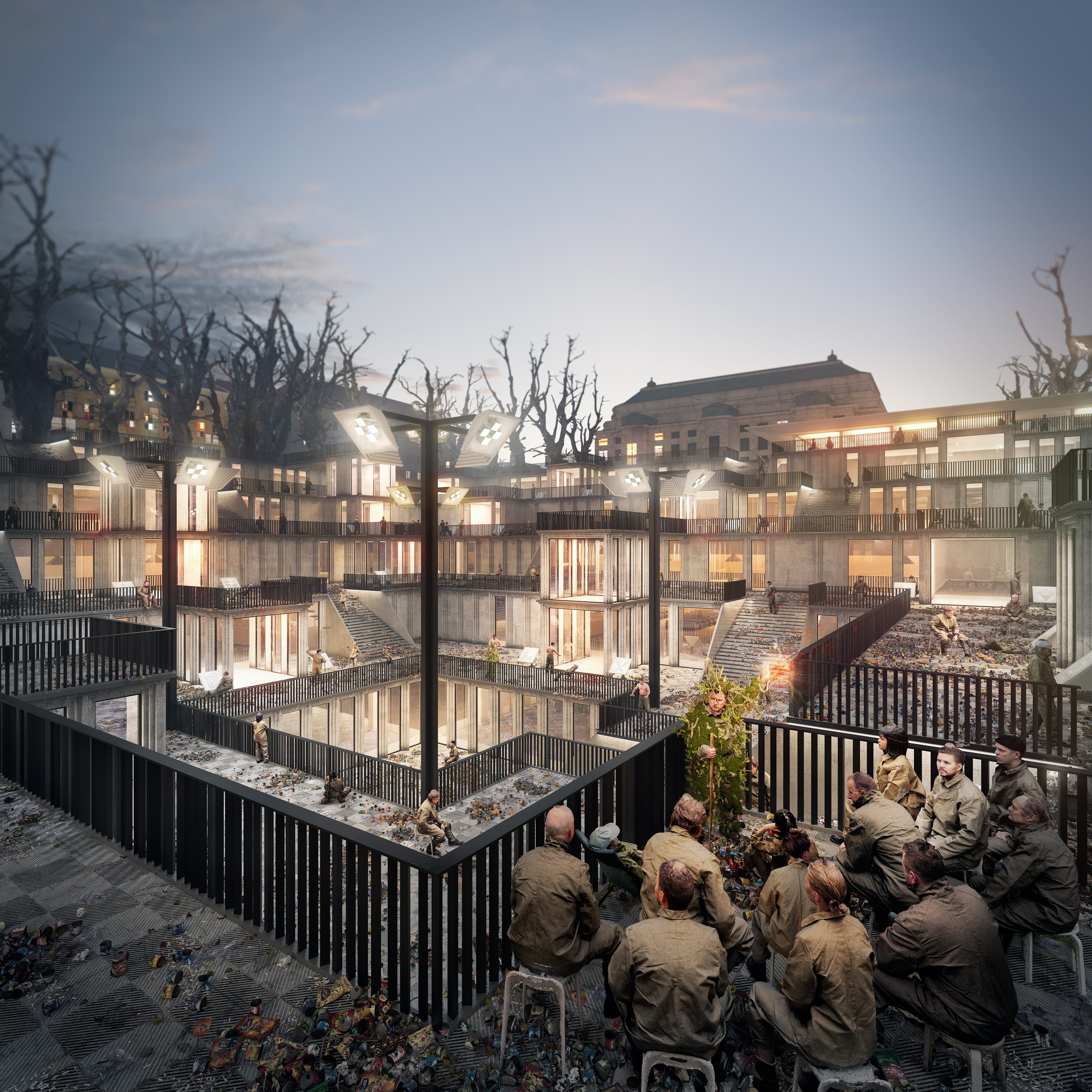
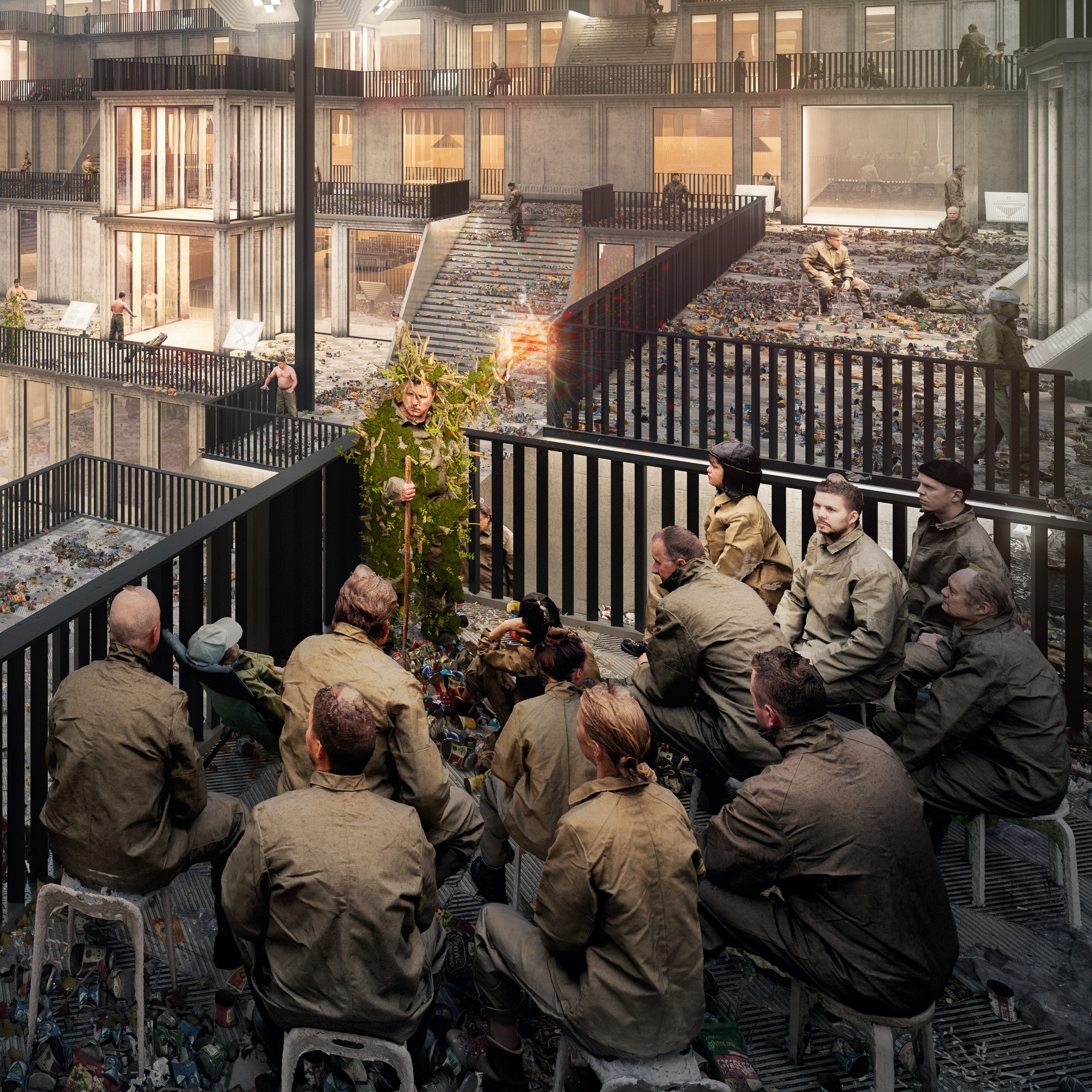
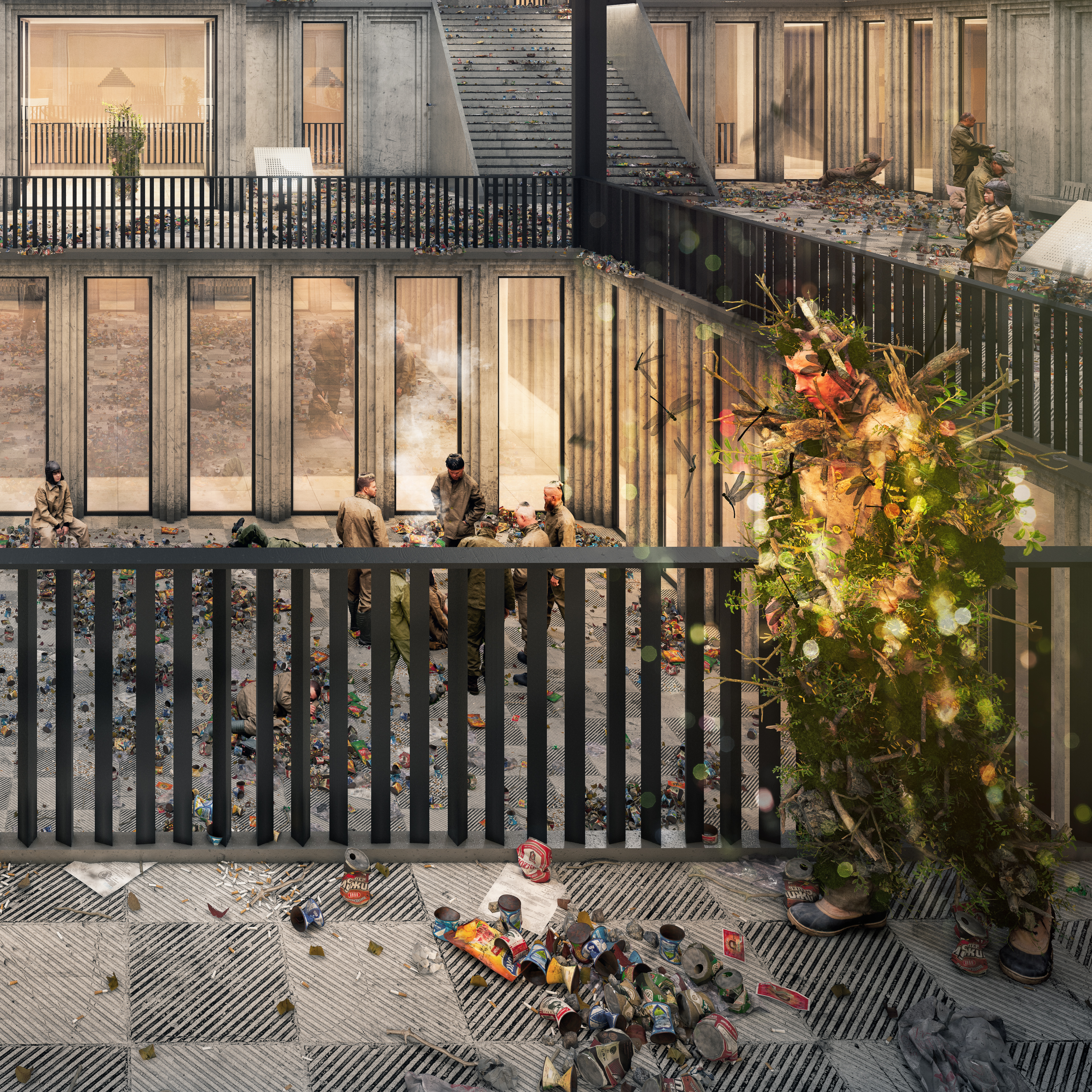
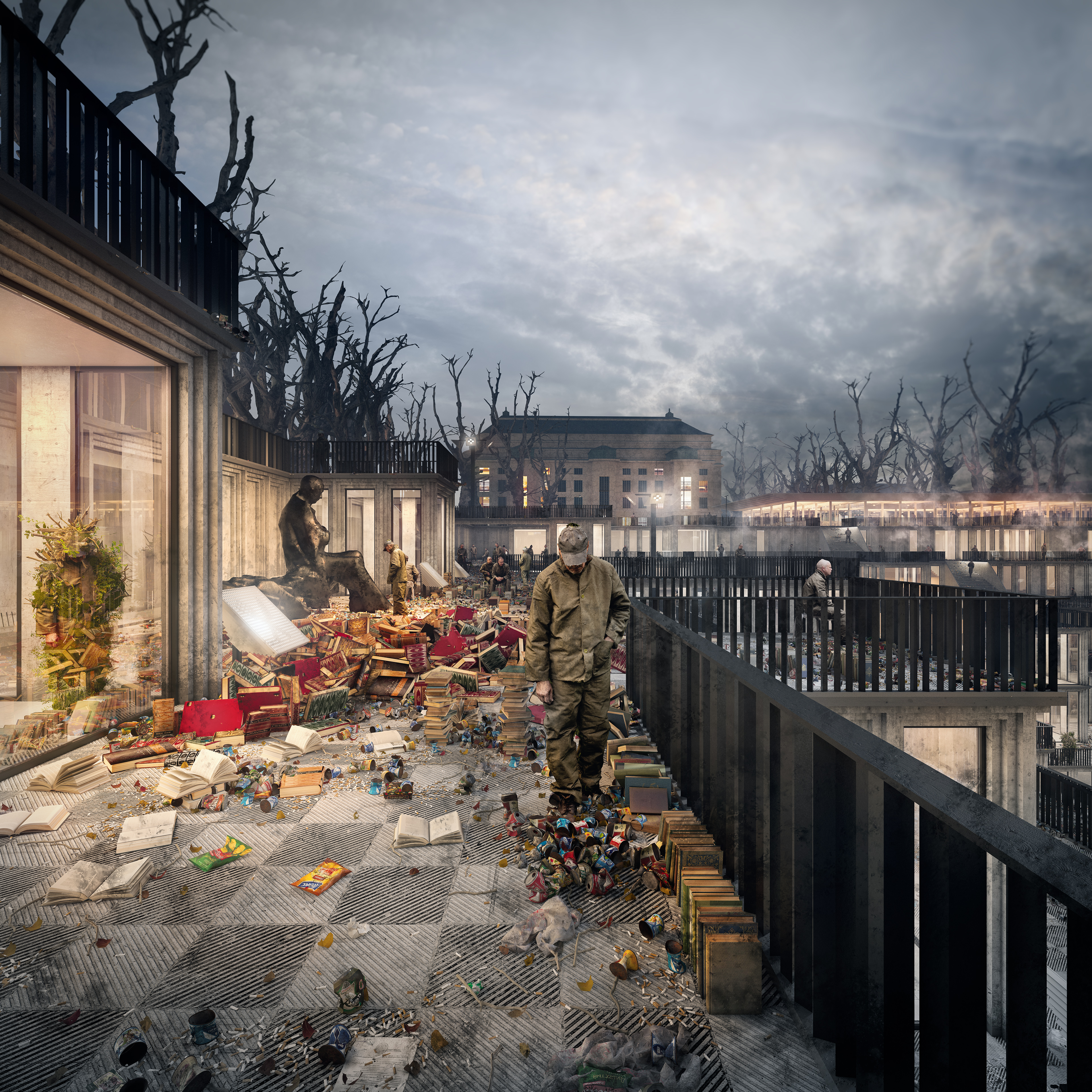
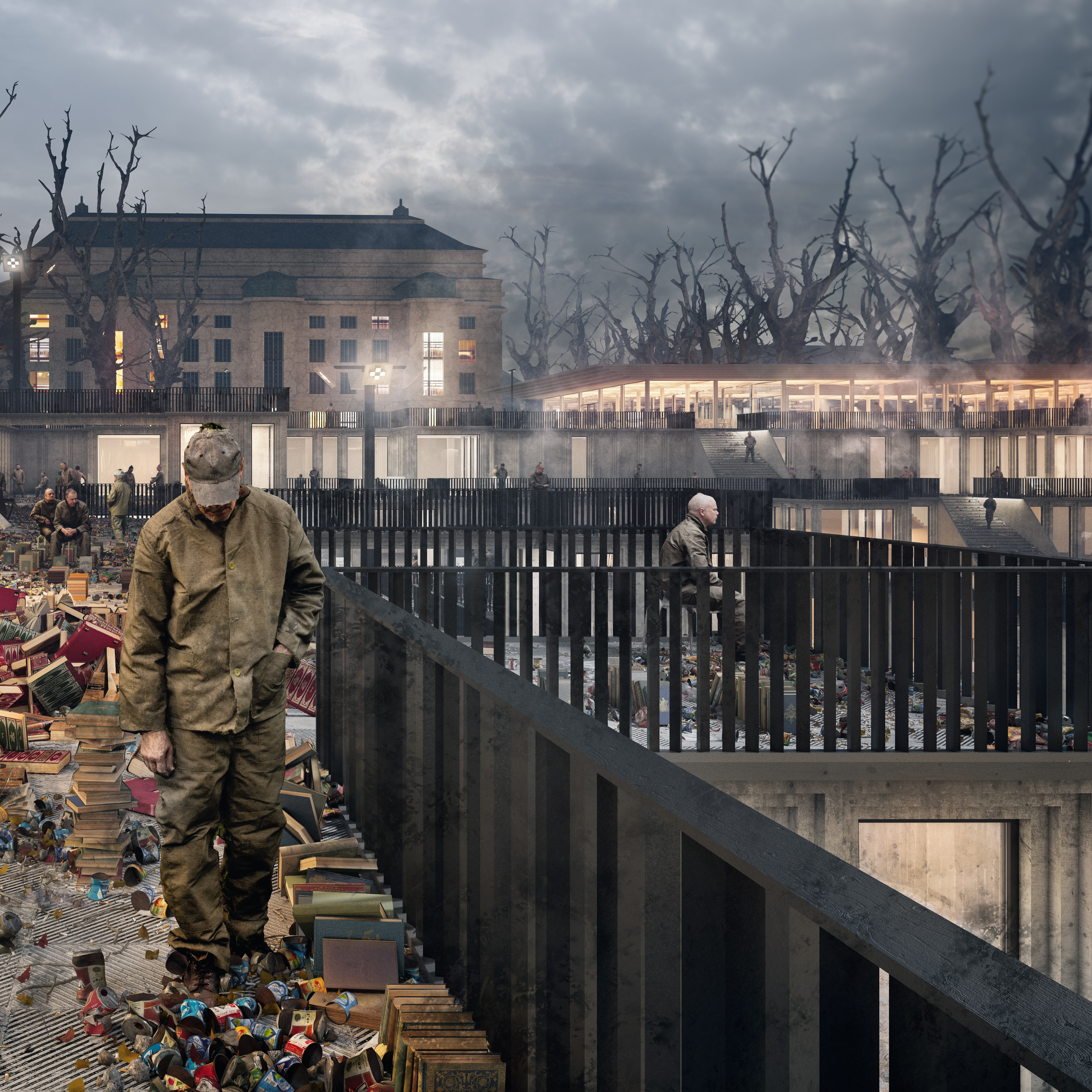
To facilitate this model of intergenerational stewardship, the project introduces a novel religious framework. While traditional belief systems venerate ancestors, the Waste Temple advocates for ritualized reverence toward future generations. The act of bringing waste to the temple is framed as purification, symbolizing the alleviation of the moral burden associated with consumption and participation in a collective aftercare initiative. In this context, religion is employed not as satire, but as a serious institutional model intended to sustain responsibility across extended temporal horizons.
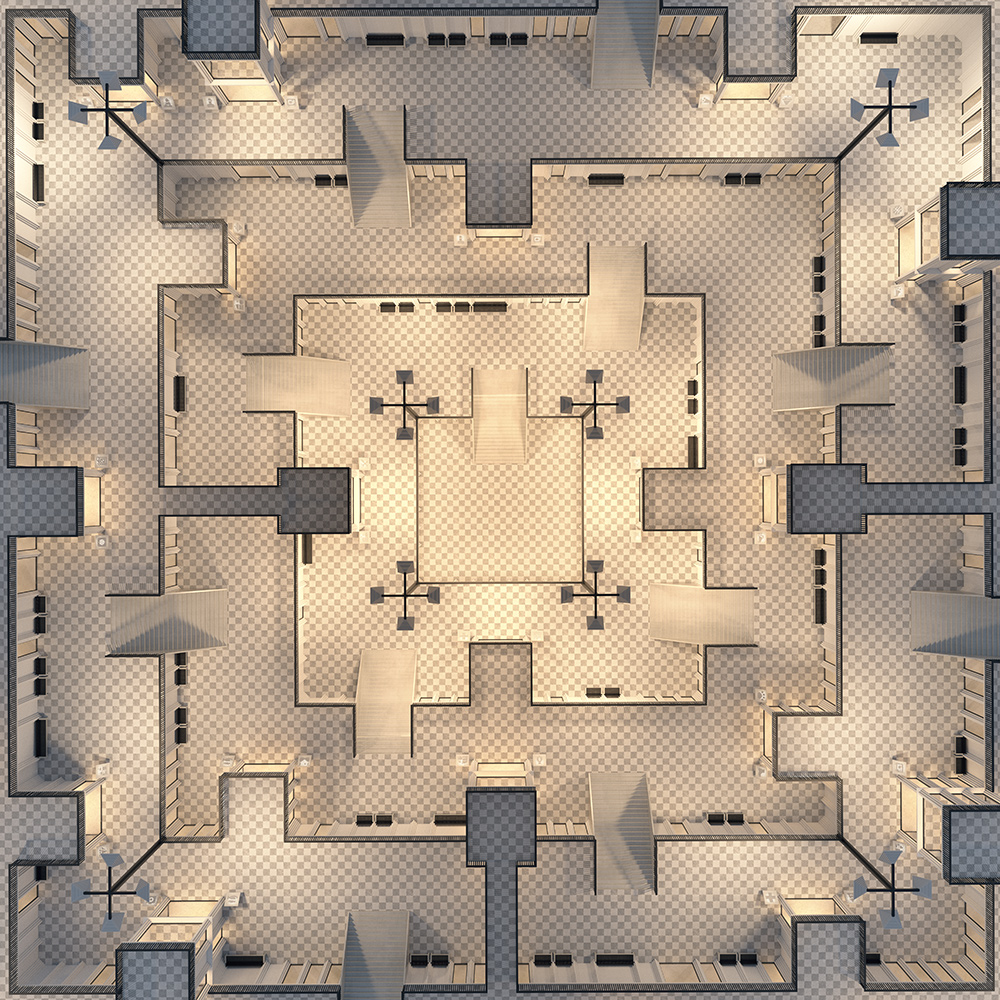
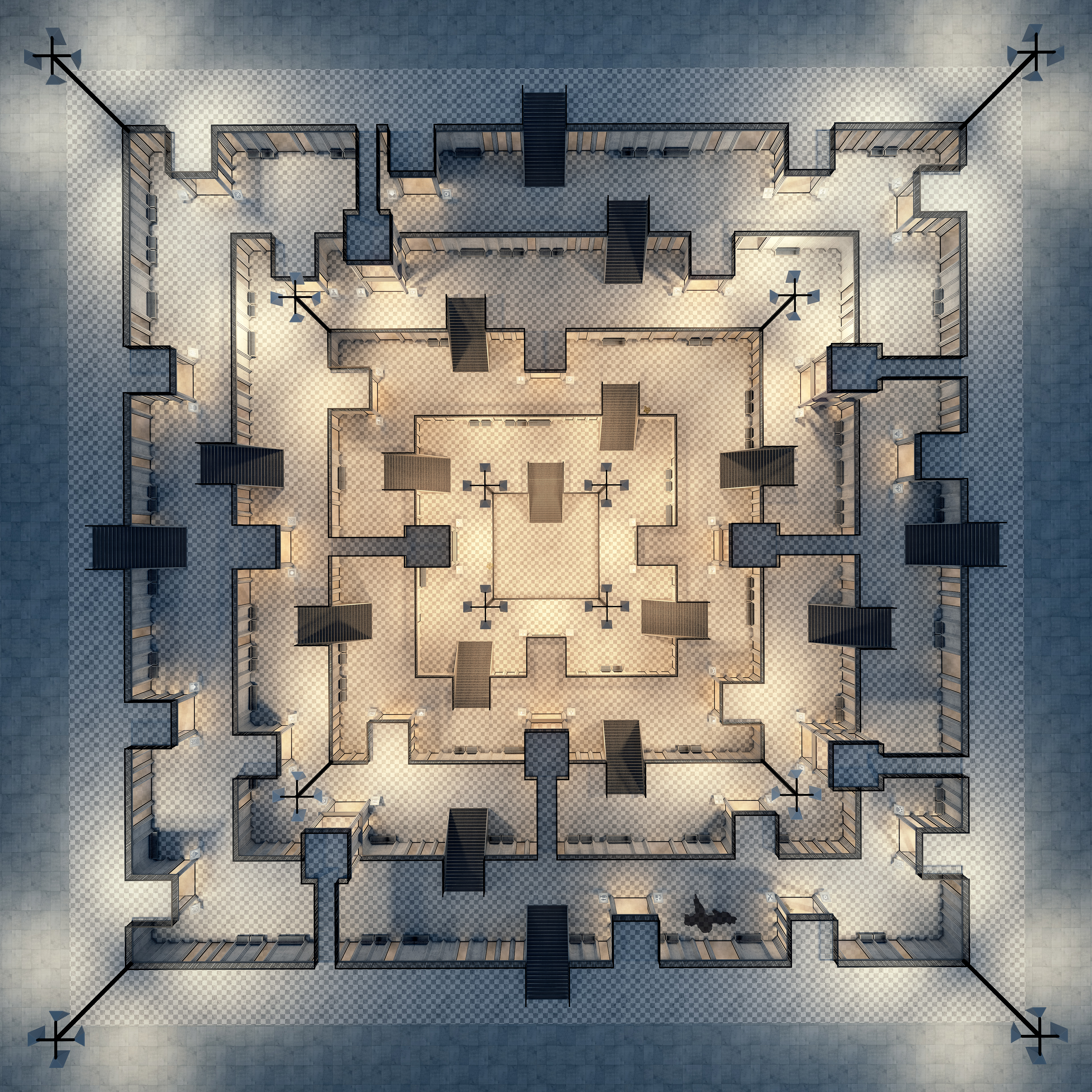
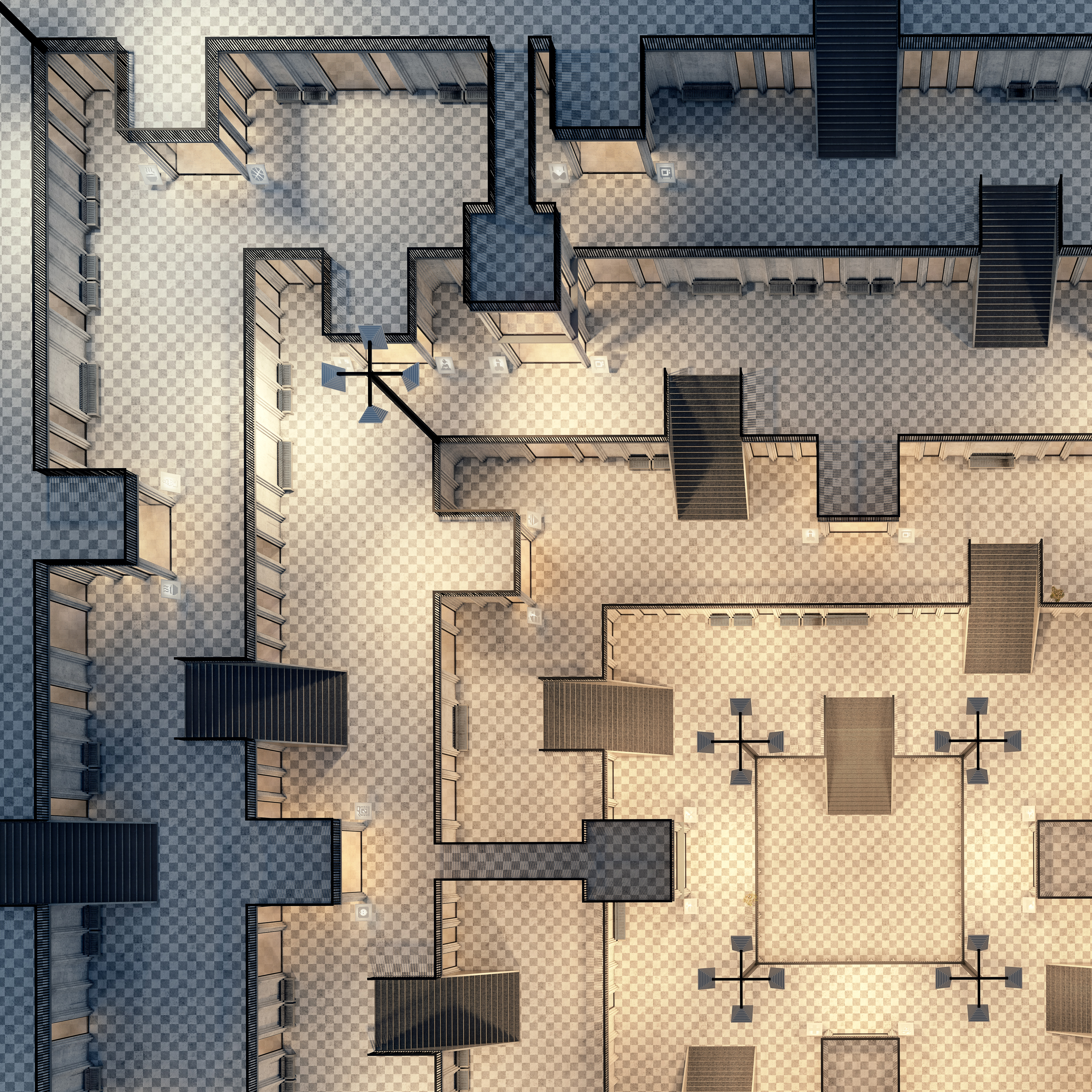
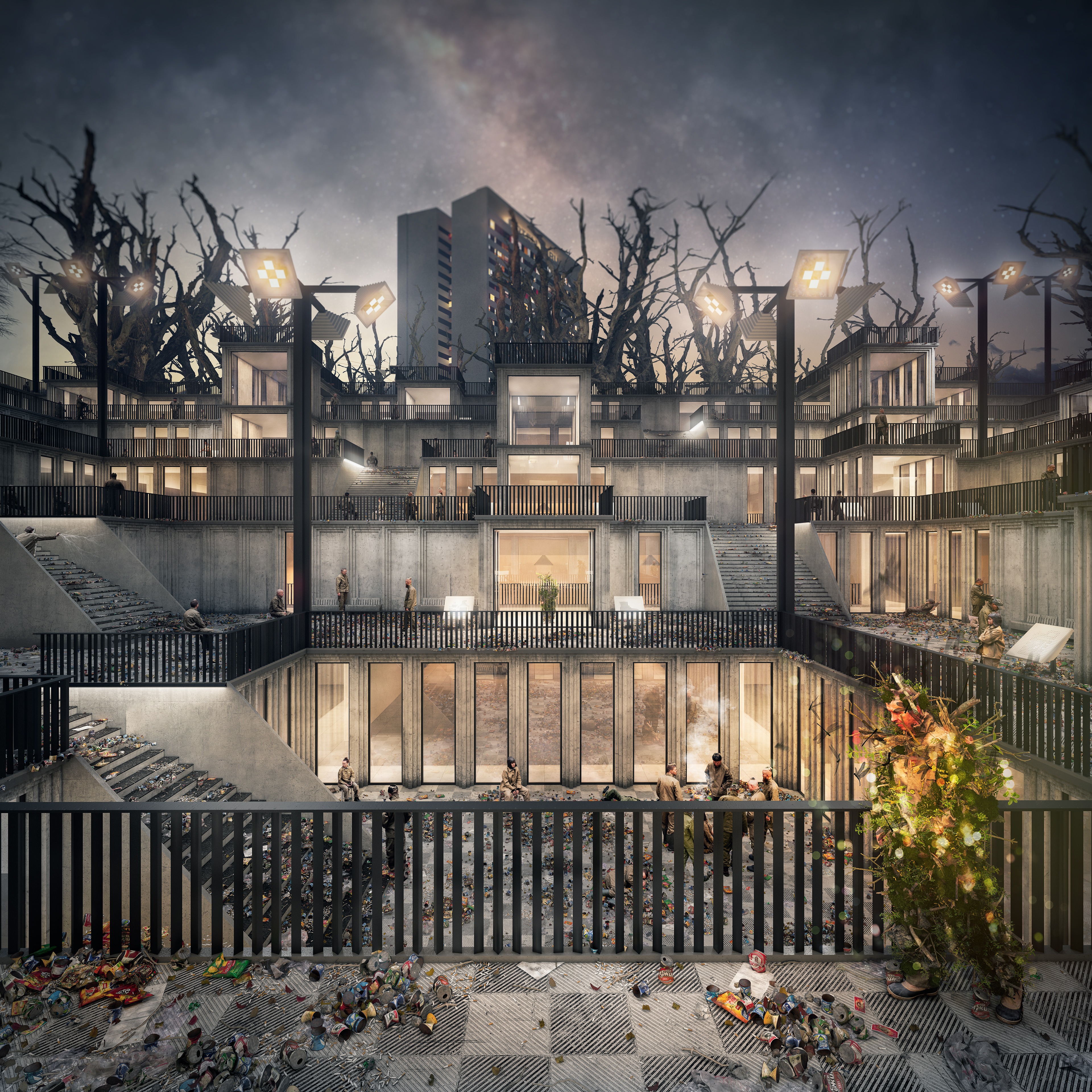
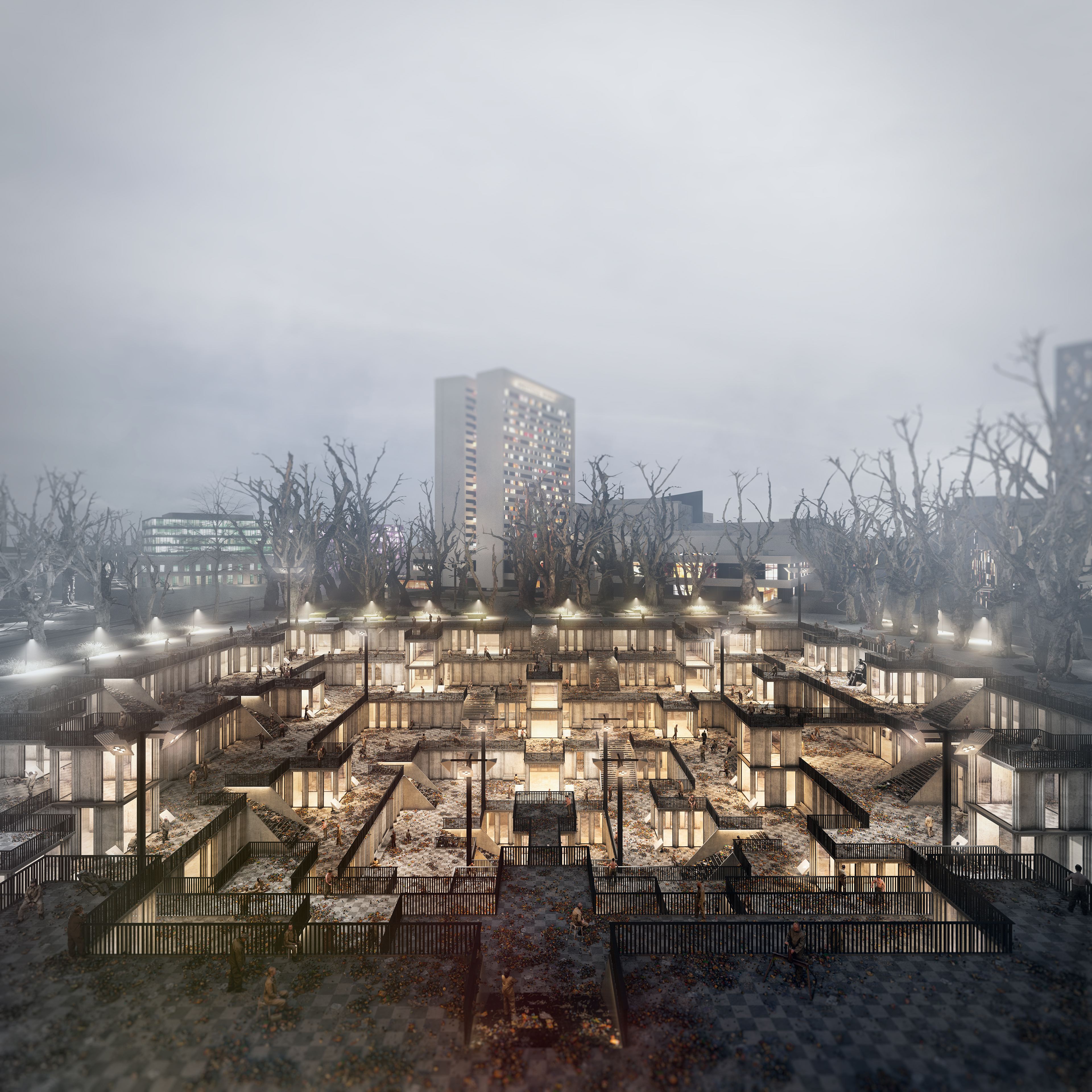
The prototype temple is located in central Tallinn, on the site of Tammsaare Park. Designed as a multi-level underground stepwell, the structure integrates public outdoor areas, ritual interiors, and deeper storage layers. Primarily constructed from wood, the building acknowledges the impermanence of materials and anticipates its eventual decomposition and re-extraction in the distant future. The temple is conceived as part of a global network, adaptable to a variety of cultural and environmental contexts.
The project intentionally addresses the moral contradictions inherent in consumer society. Ritualized disposal enables individuals to persist in consumption with a sense of absolution; however, the system is anticipated to evolve toward greater asceticism and restraint over time. The proposed religious framework functions as an unstable regulator, capable of either curbing or promoting consumption in response to prevailing societal conditions.
The Waste Temple does not claim to provide a technical solution to the waste crisis or offer redemption. Rather, it establishes a speculative framework for considering responsibility on a temporal scale that surpasses human life, architecture, and even civilization itself. Interpreted as architecture, the proposal is radical. When viewed as scripture, the accompanying images shift from illustrations to icons, serving as artifacts of a belief system oriented toward deep time.
© Ott Kadarik
insta: @kodarik @luidrik @ktarchitects