Locations: Georgia. Tbilisi
Tbilisi DIY
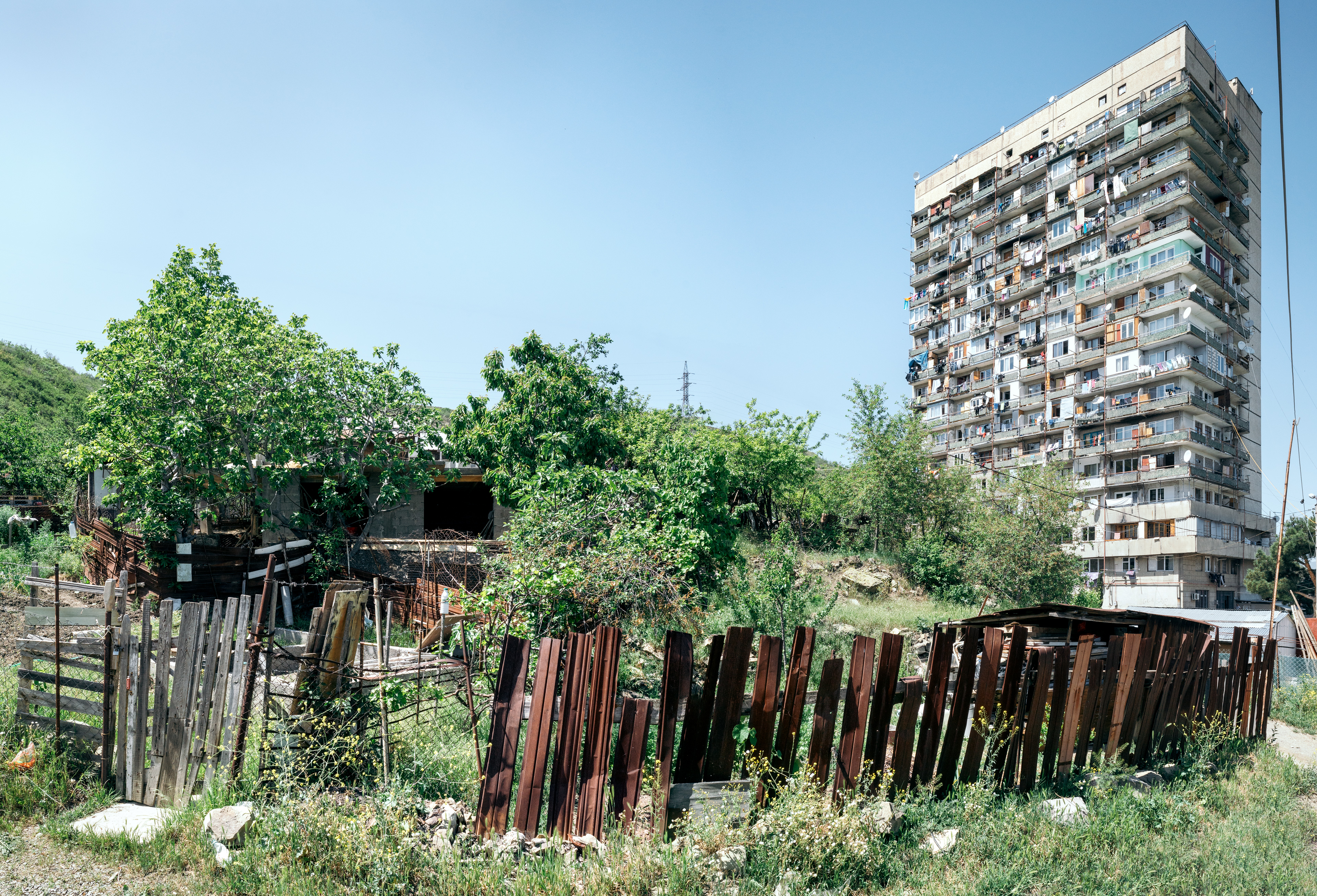
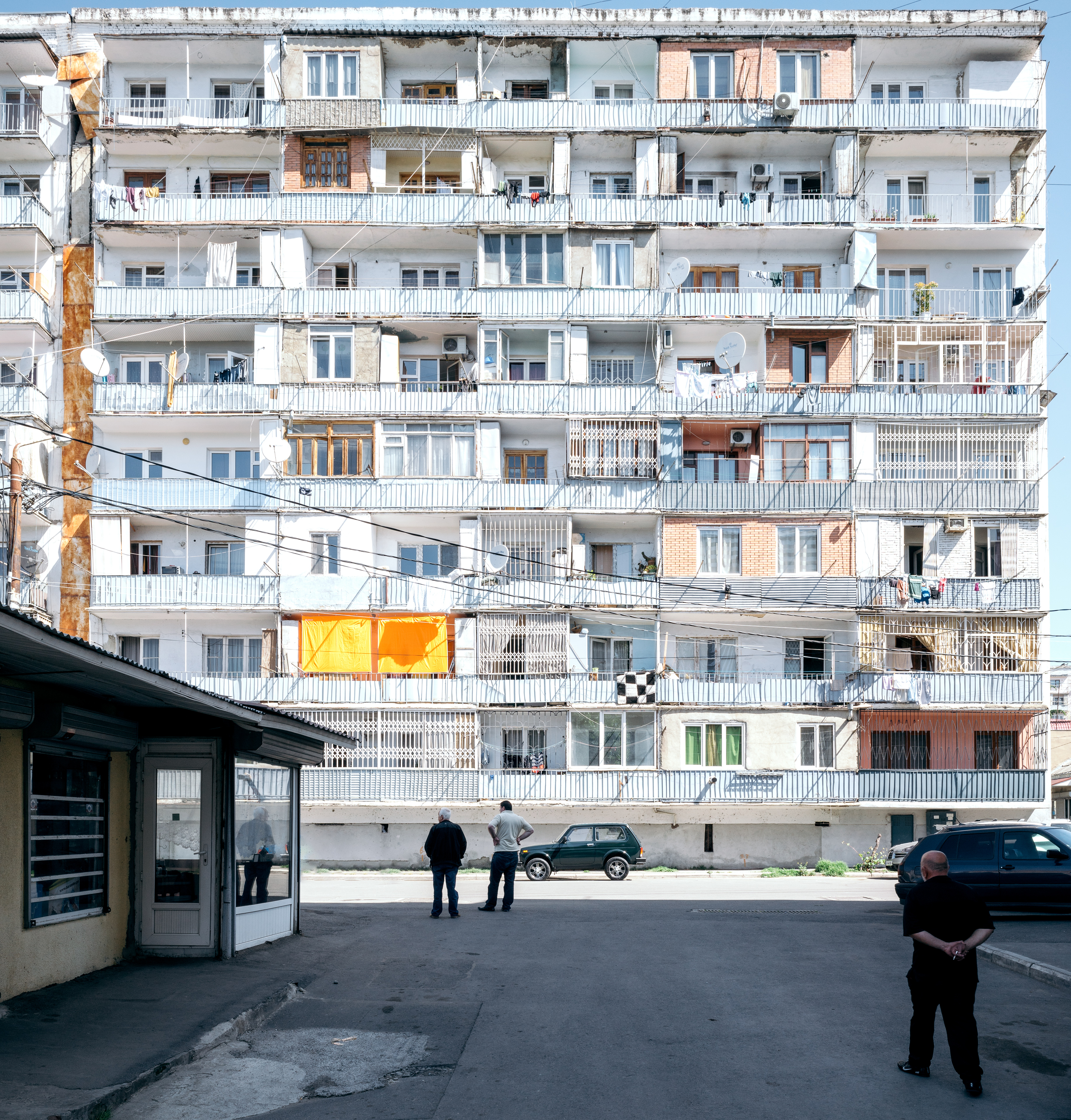
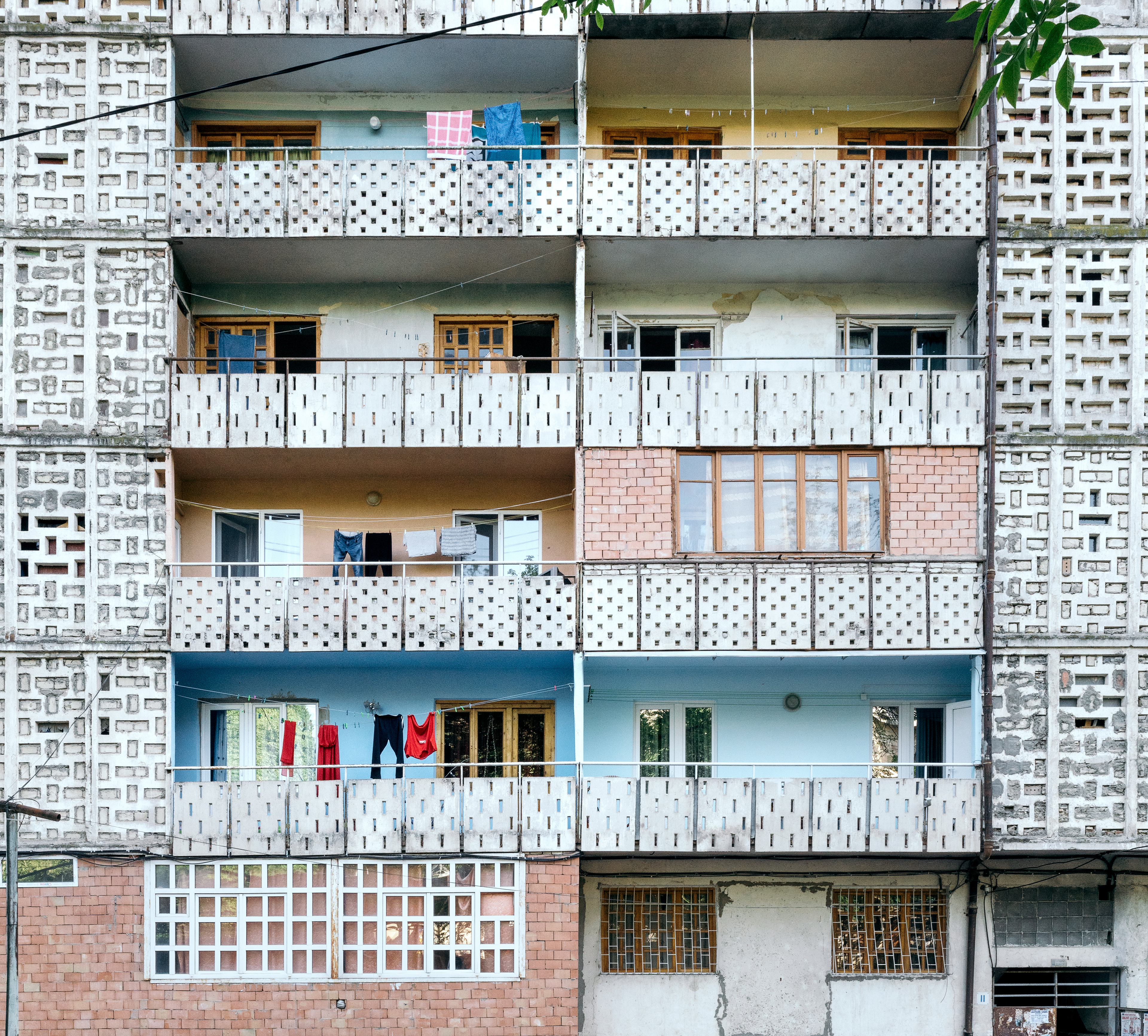
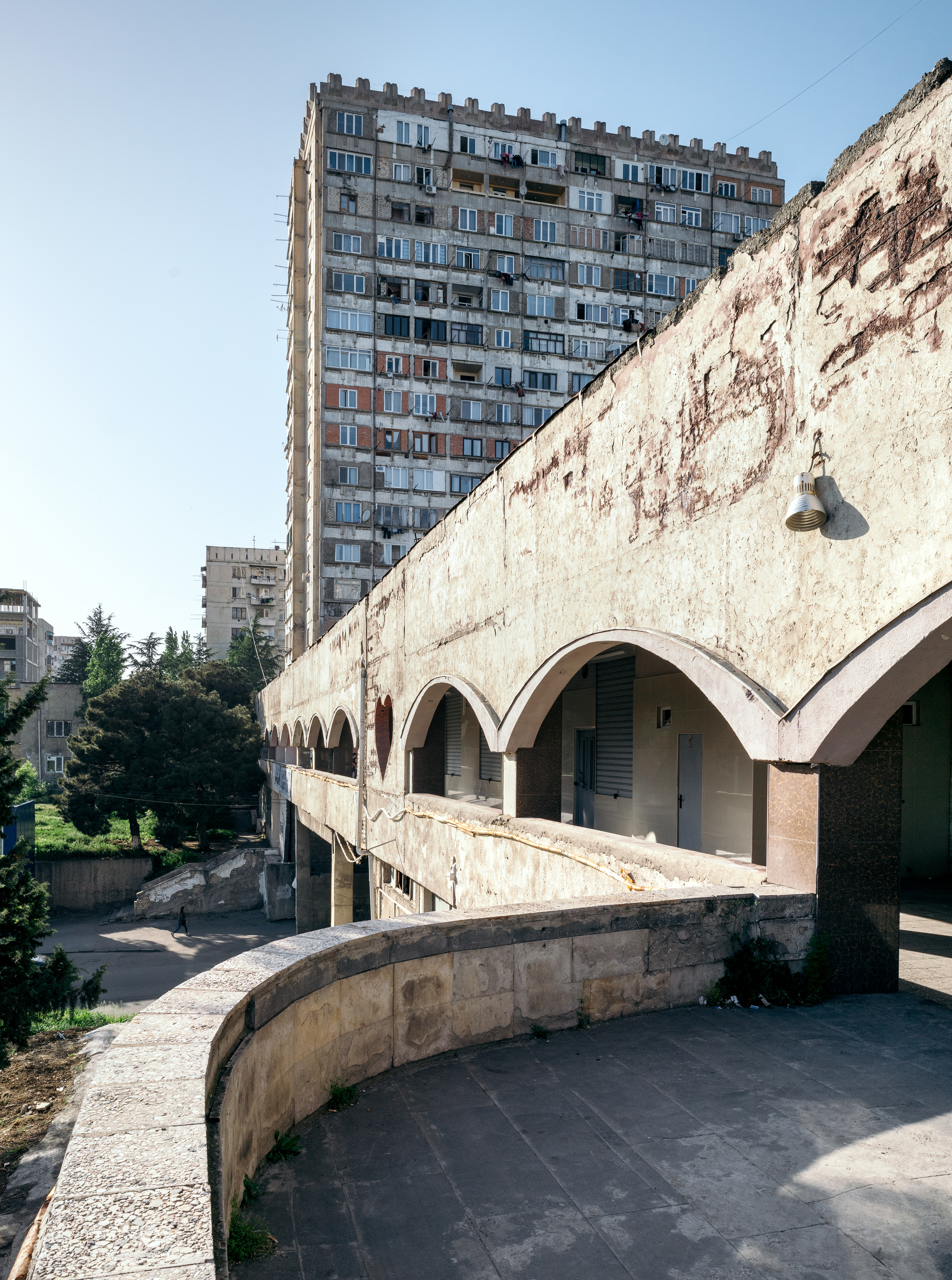
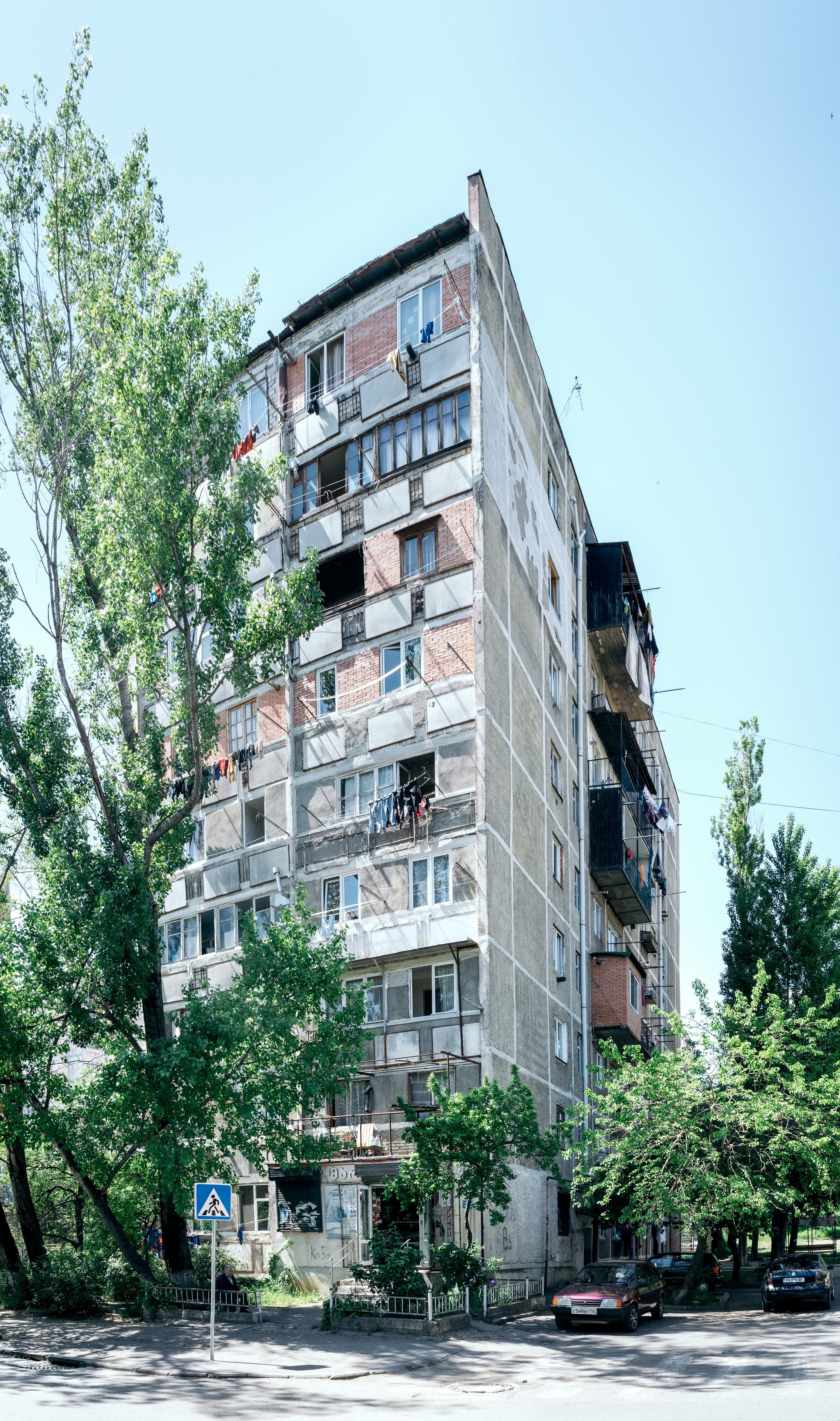
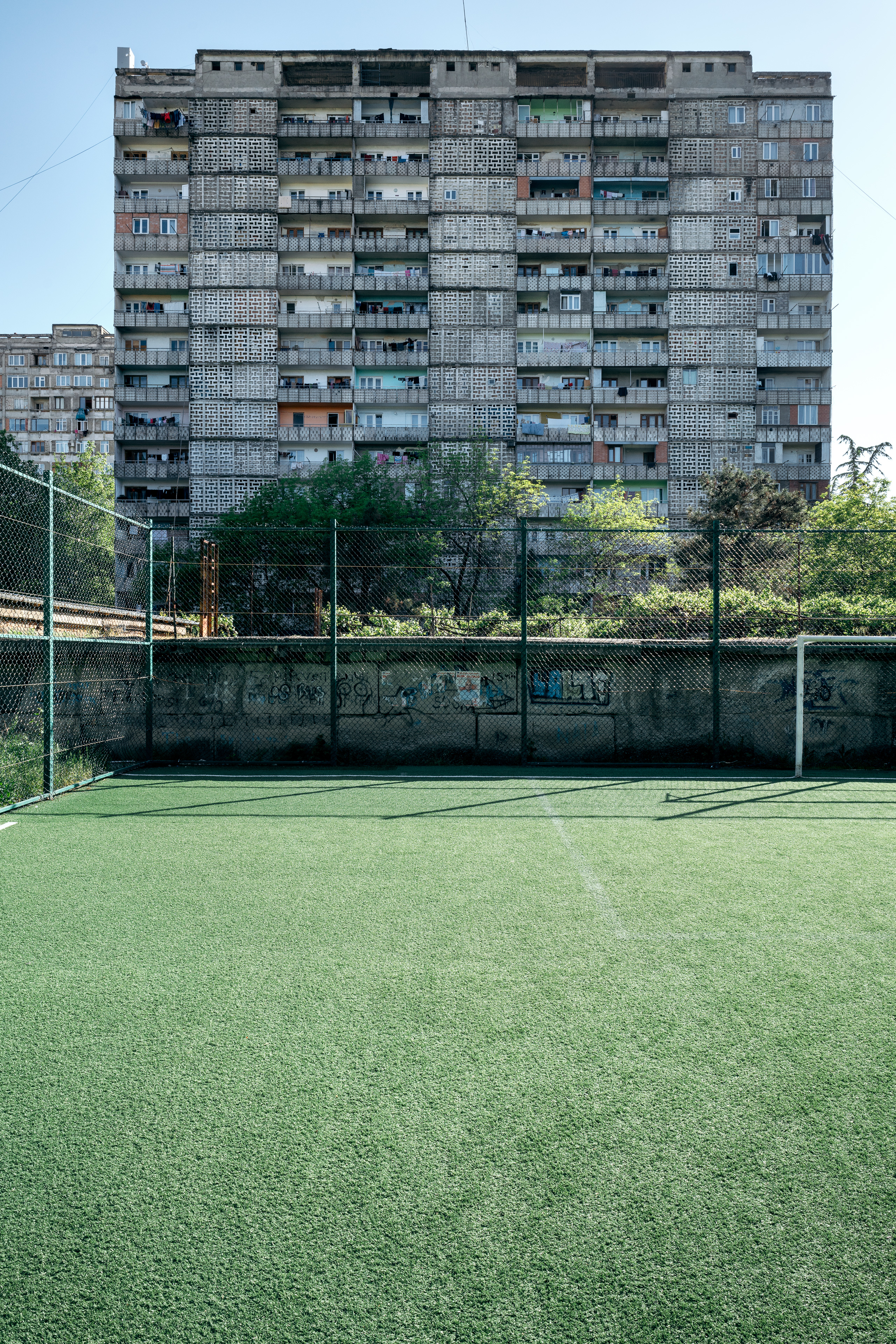
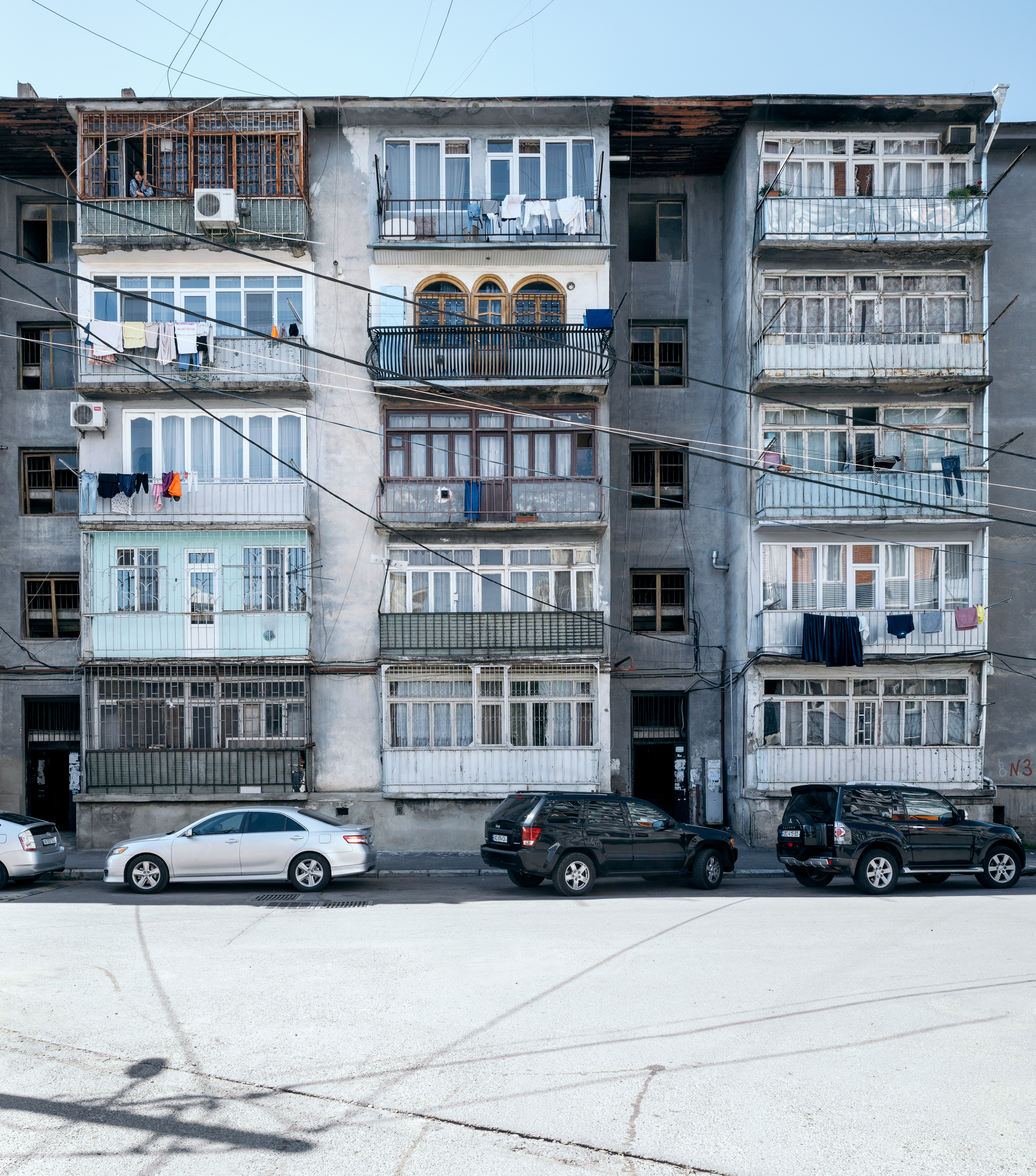
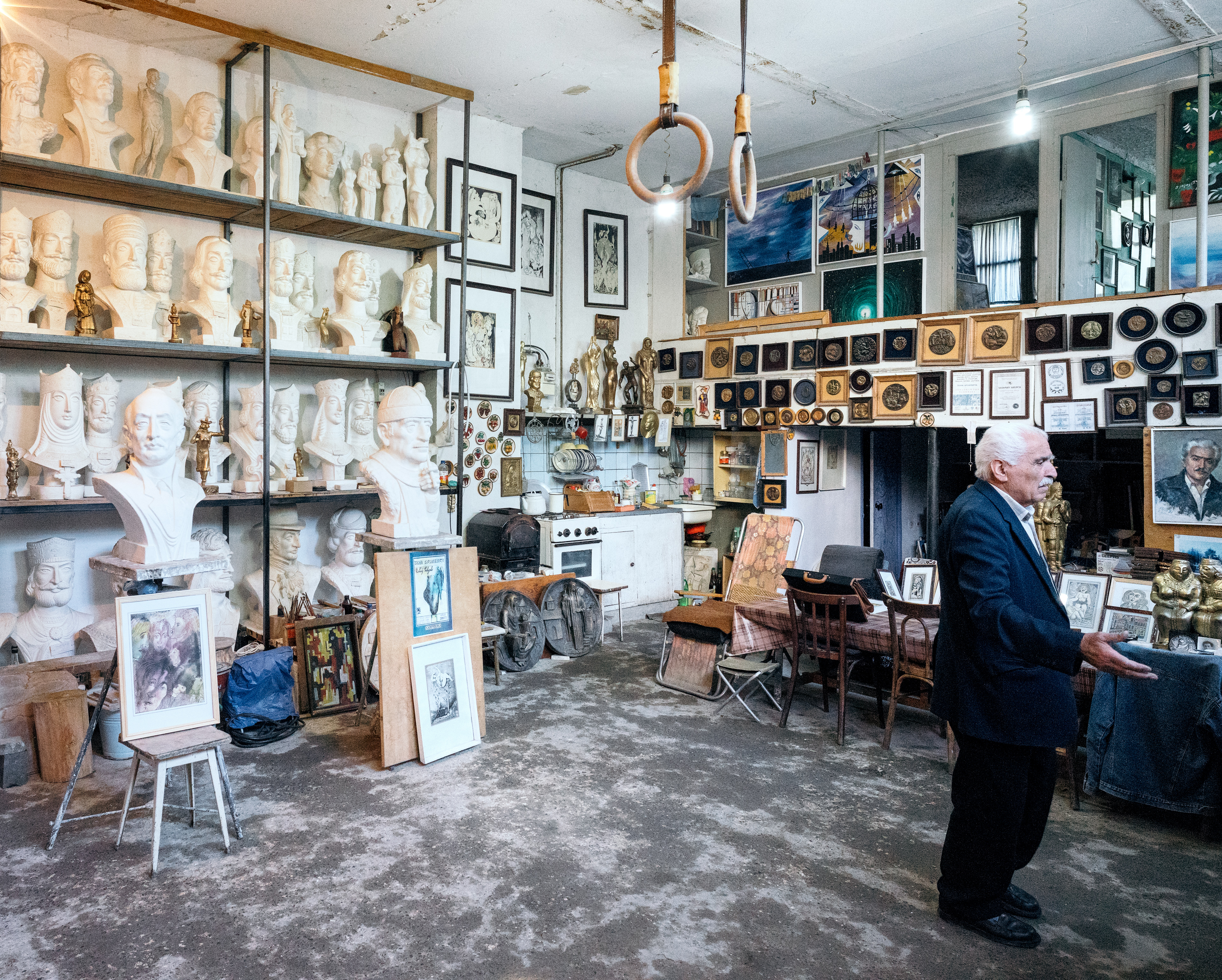
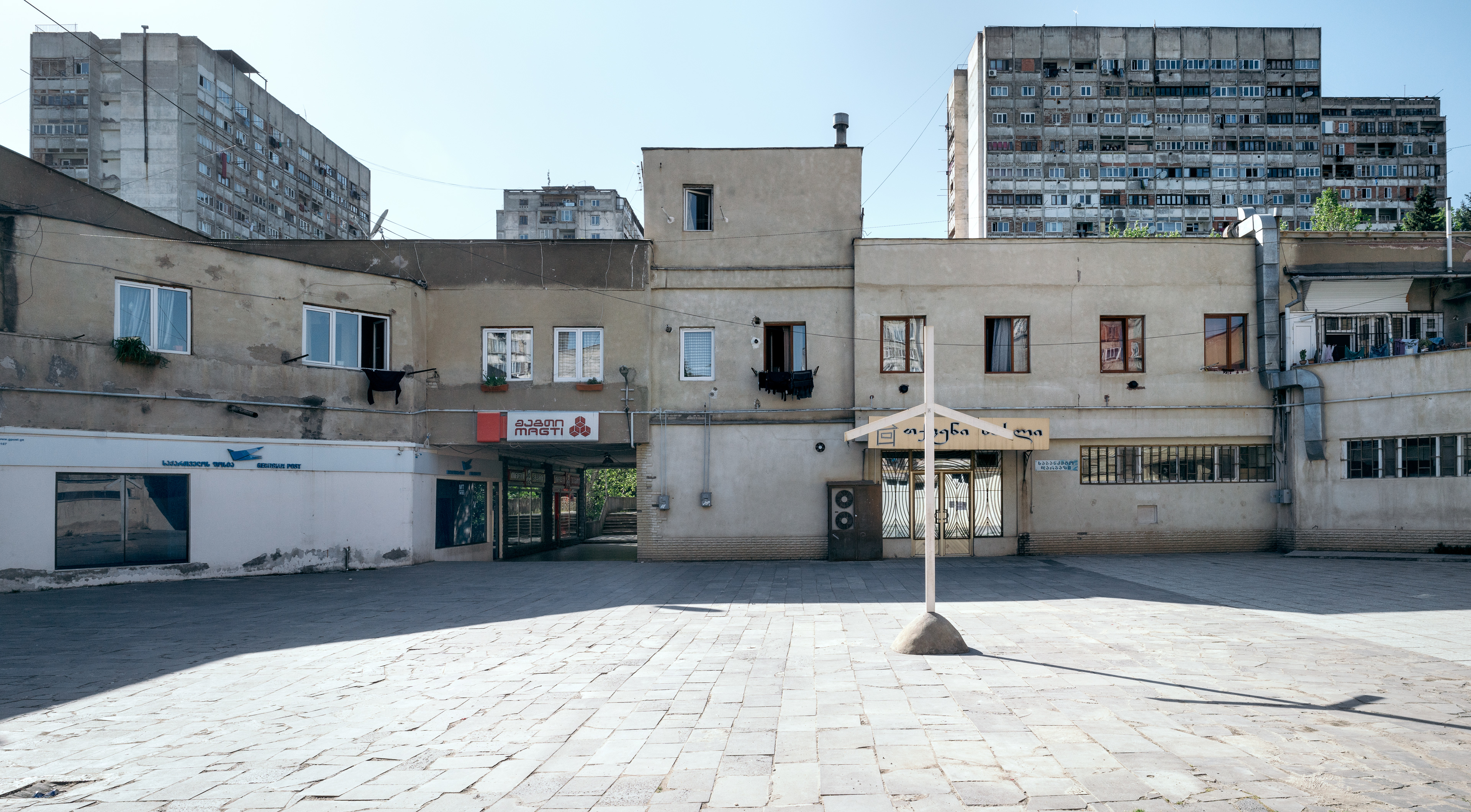
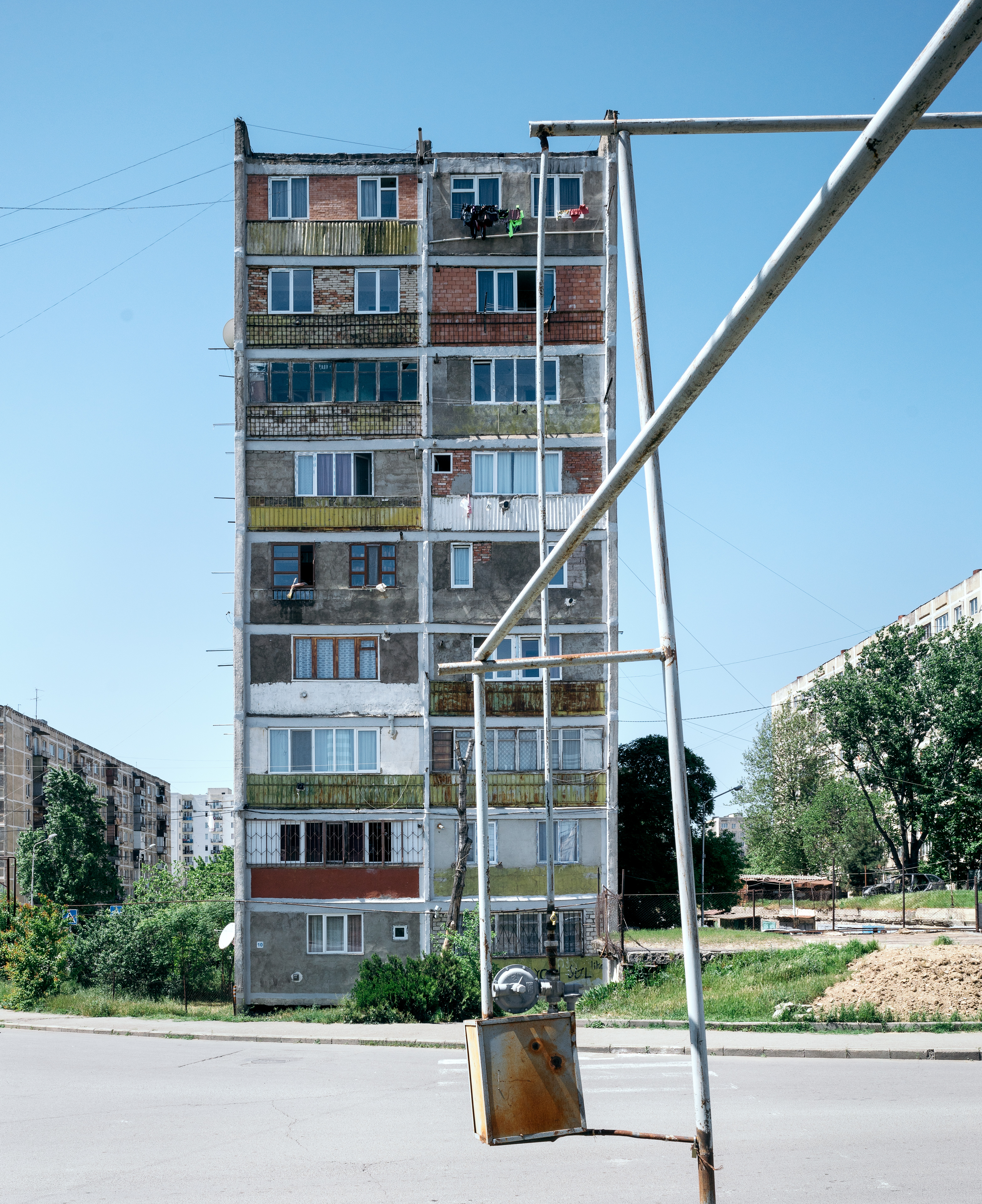
Spring 2018In the suburbs and residential districts of Tbilisi, a distinct stratification has developed over time atop Soviet-era modernist residential blocks. This layer cannot be classified simply as random construction or as a conventional architectural project. Instead, it represents vernacular, self-generated architecture shaped by residents' daily needs, practical skills, and local knowledge. Rather than opposing the modernist foundation, this additional layer adapts, expands, and softens the rigid, formalist spatial framework.
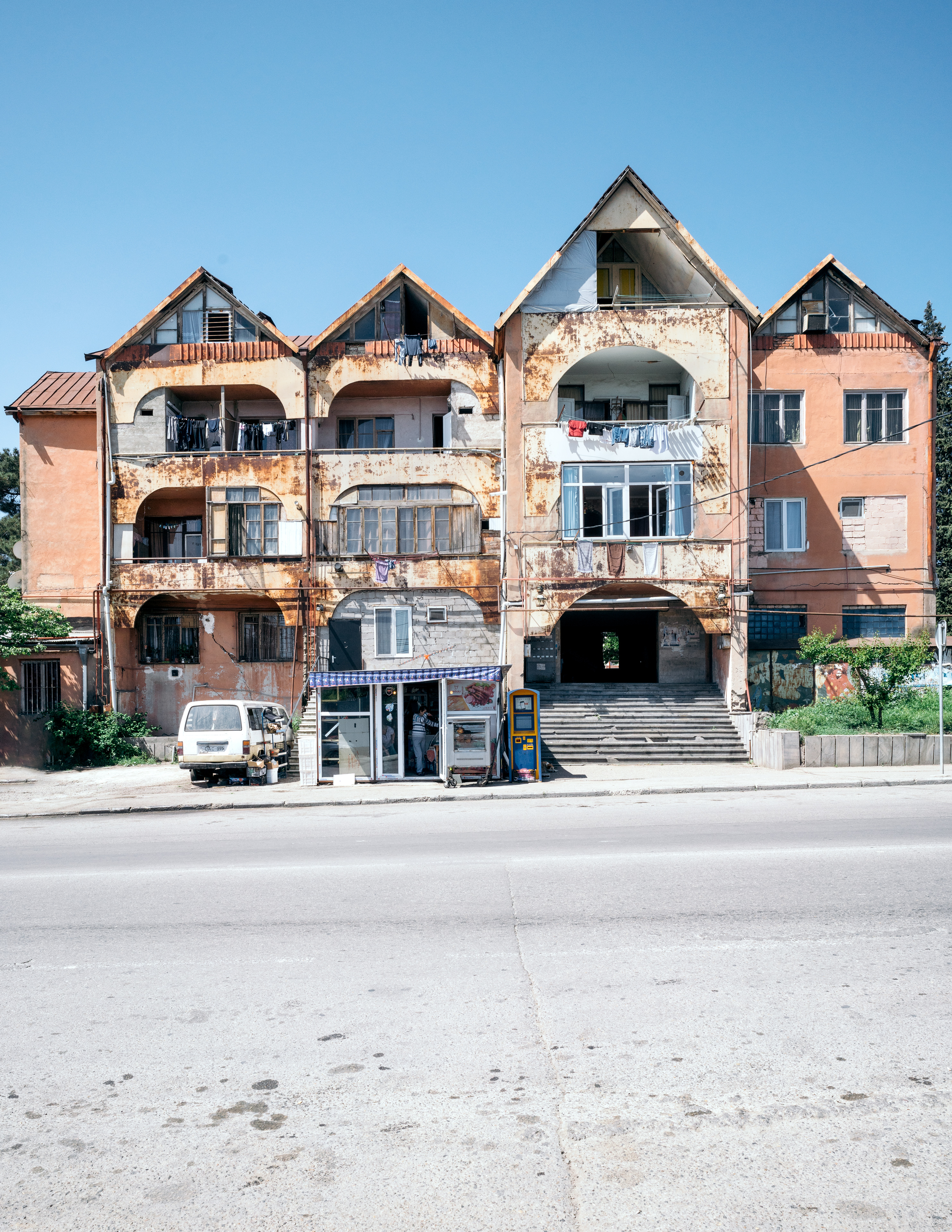
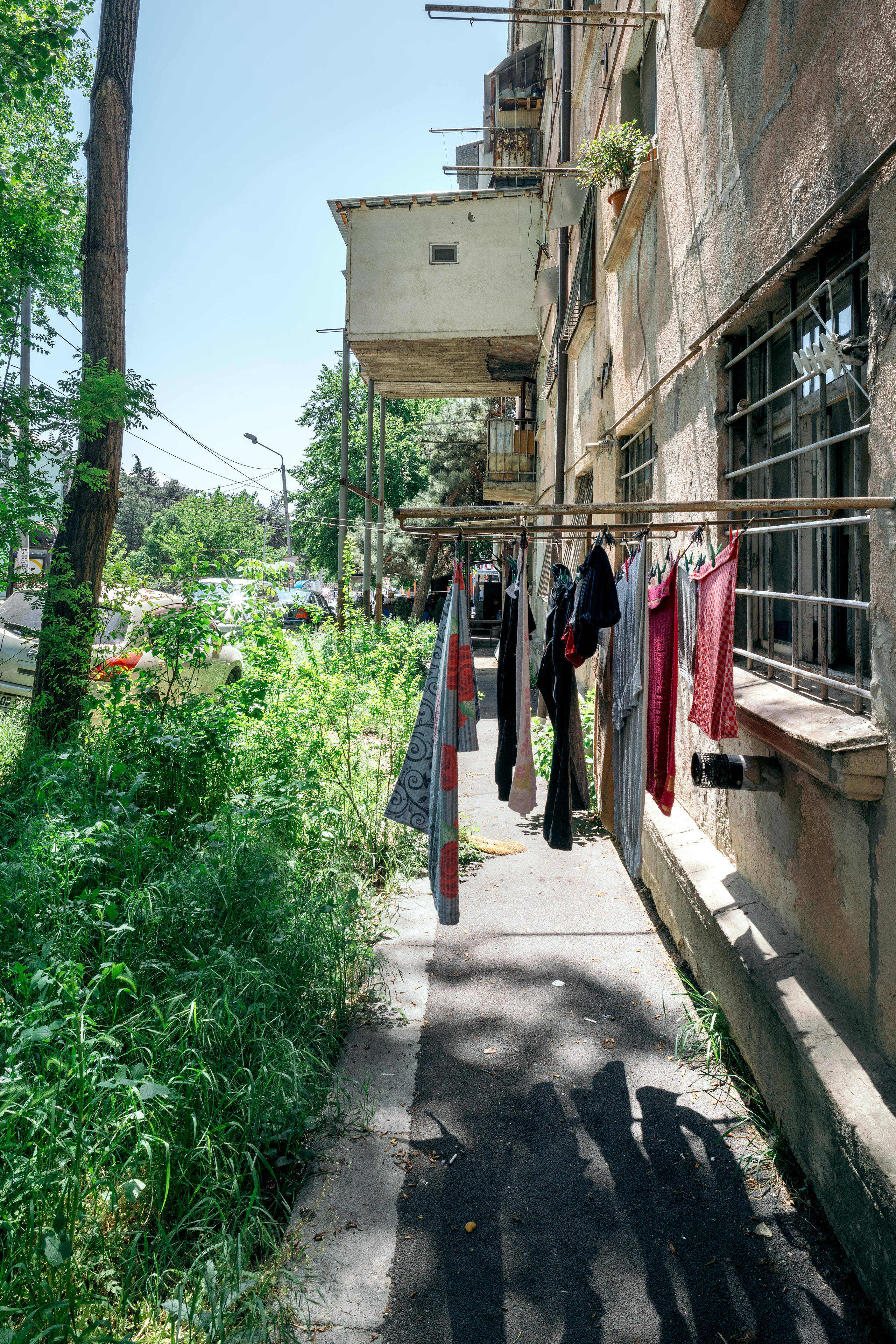
The architecture of Soviet-era residences was characterized by standardization, functional rationality, and uniform designs. In Tbilisi, this framework has gradually been transformed by everyday practices that diverge from the prescribed norms of modernism. Residents have enclosed and multiplied balconies, extended apartments toward streets and courtyards, and added stairs, gallery-like connections, shelters, and workspaces. Although these interventions do not adhere to academic architectural conventions, they exhibit a distinct internal logic and construction rationality.
Local builders and residents play a central role, relying on experiential skills rather than formal blueprints. Construction typically occurs in phases and is reactive and adaptive; spaces emerge in response to immediate needs rather than abstract concepts. Material selection is pragmatic, utilizing what is available, repairable, and familiar. This architecture remains perpetually unfinished, existing in a continuous state of transformation.
The interstitial spaces between buildings in Tbilisi are as dynamic as the structures themselves. Courtyards, street edges, and residual plots host micro-economies, workshops, shops, cafes, or, alternatively, dense and untamed greenery. The boundaries between public and private are fluid and subject to ongoing negotiation. Certain extensions serve as private property, while others function as communal spaces, with their uses evolving over time.
The overall atmosphere of this spatial stratification is both practical and exuberant. Rather than seeking aesthetic purity, it conveys vitality, adaptability, and social density. Tbilisi’s self-generated architecture embodies a notable contradiction: a rigorously structured modernist framework is infused with a baroque sense of vitality and formal abundance. The unique architectural identity of Tbilisi emerges from this tension between control and improvisation, planning and spontaneity.
Therefore, DIY Tbilisi represents more than a visual phenomenon; it constitutes a spatial discourse on urban ownership and the emergence of architecture when formal planning yields to everyday needs. This architecture does not seek approval, yet it commands attention.






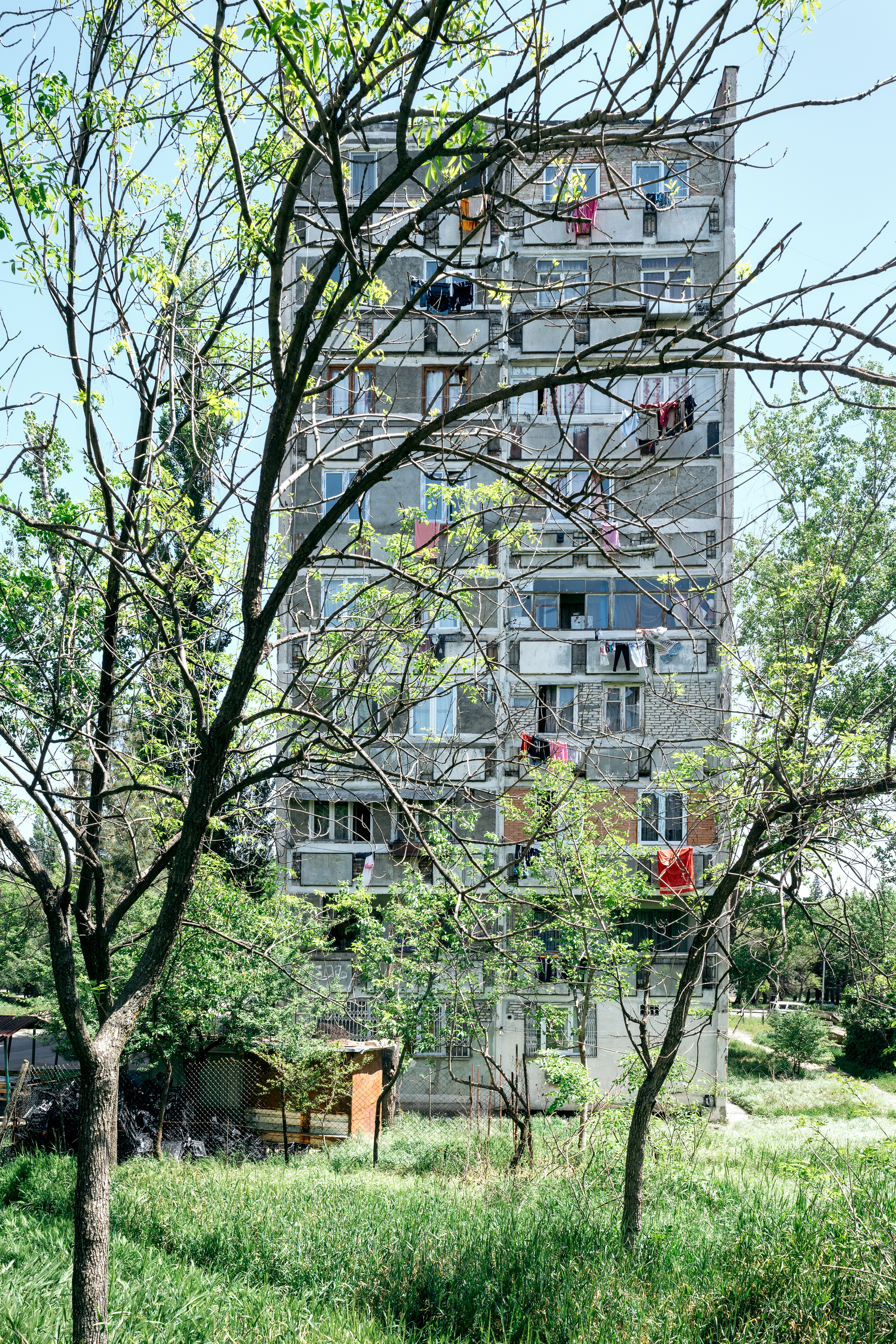

© Ott Kadarik
insta: @kodarik @luidrik @ktarchitects