Locations: Japan, Tokyo
International Panorama vol. 2
Exhibition in Tallinn Art Gallery
Tallinn, Estonia
Summer 2010
International Panorama vol. 2 presents Tokyo as a hyper-dense, multilayered urban organism undergoing continual transformation. Whereas the first part of the series examined the militarised and surveilled substructures of Chinese cities, this second volume investigates the internal logic of the Japanese megacity, emphasizing its absurdity, vitality, and spatial excess.
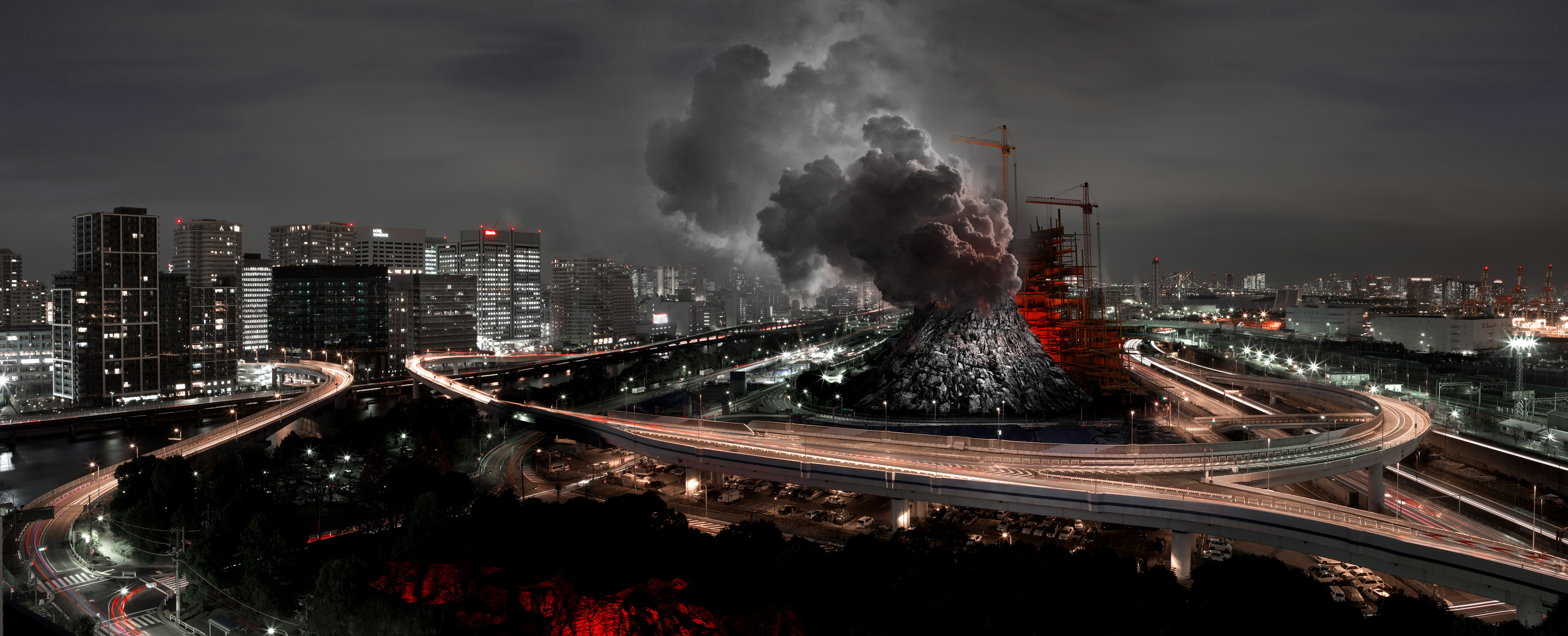
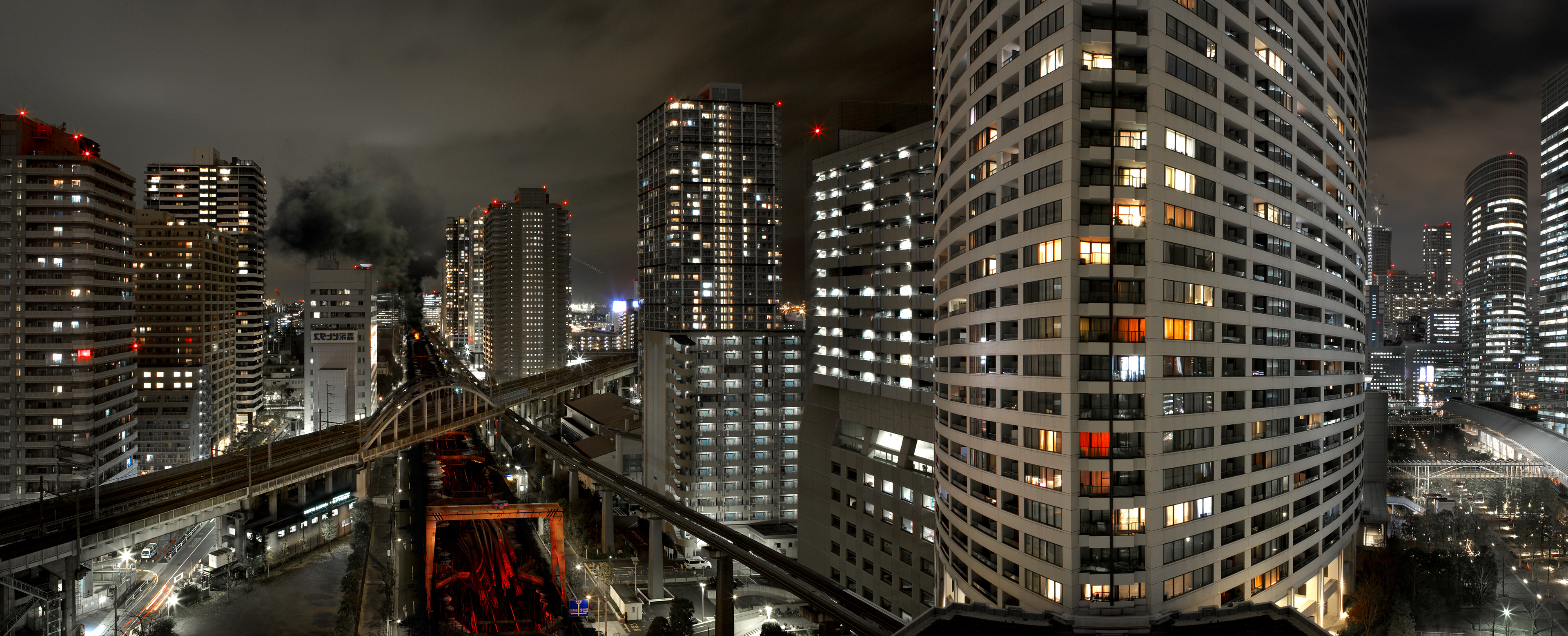
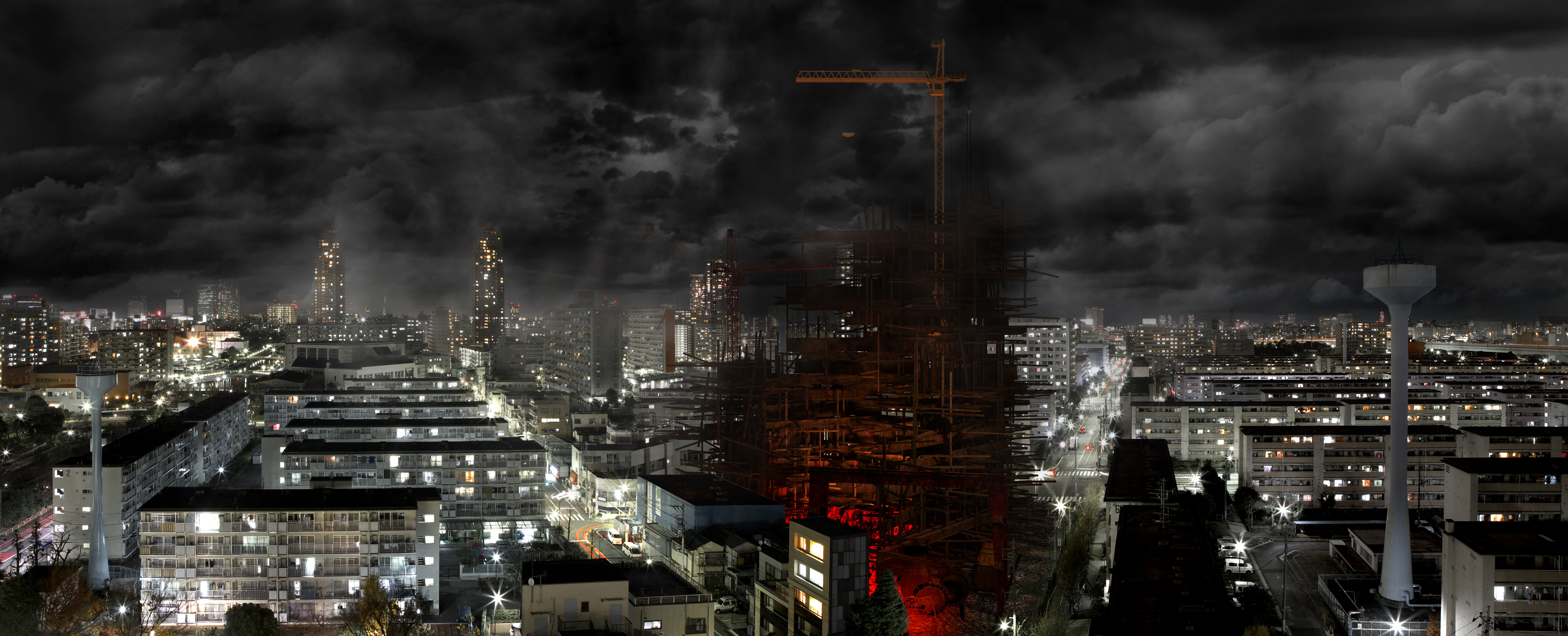
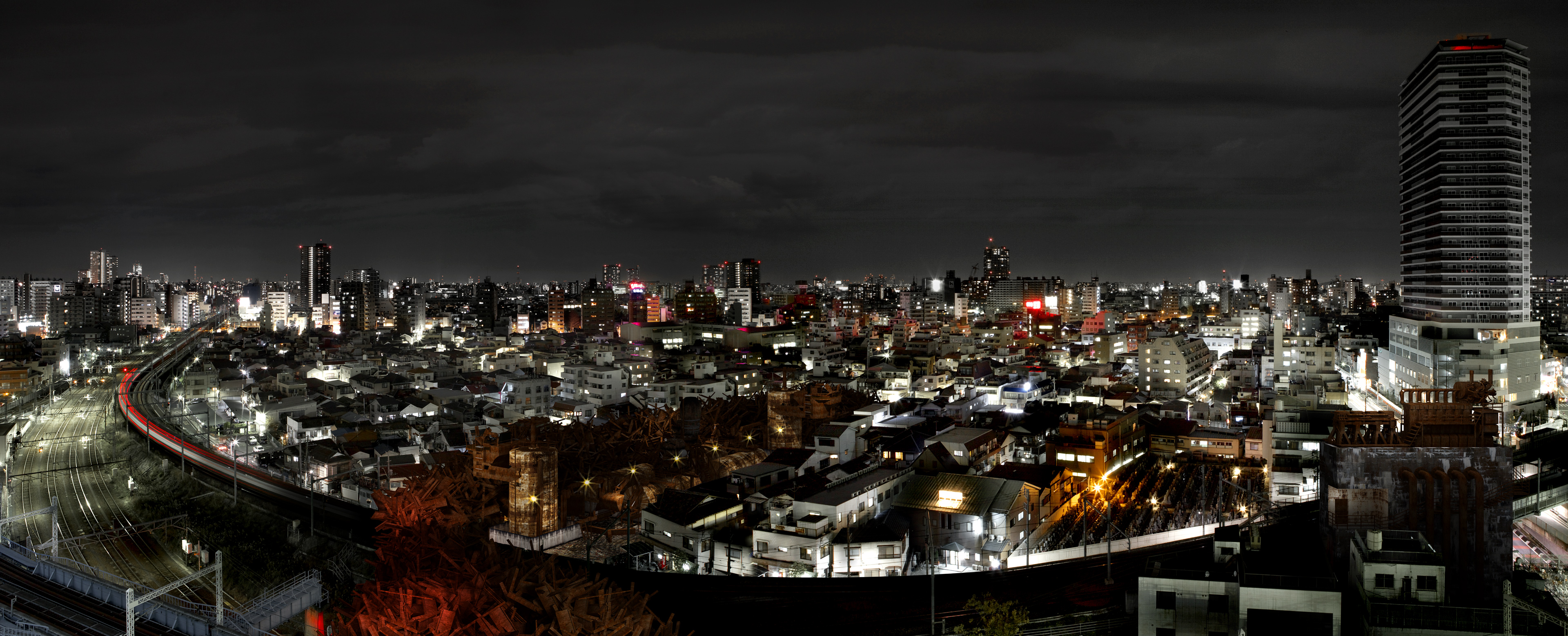
The panoramic works are composed of photographs captured from Tokyo rooftops during autumn 2009. These images are digitally dissected and reassembled to form synthetic urban environments that, while not existing in reality, are constructed entirely from authentic architectural fragments. Rather than serving as documentary cityscapes, the panoramas operate as spatial constructs, representing cities extended to the extremes of their own logic.
Fictional place names such as Minamisuna-tatsumitō, Roppon-sumitani, and Yoyogi-shiohamabori are central to the project. Although these names appear authentic, they do not correspond to actual locations. Each is derived from real Tokyo districts where the source material was photographed. These invented toponyms function as linguistic devices that blur the distinction between reality and construction, thereby reinforcing the viewer’s uncertainty regarding authenticity and fabrication.
The images combine photographic realism with digitally rendered architectural elements. These 3D layers are not meant to disappear seamlessly into the image; instead, they deliberately distort spatial perception, pointing toward humanity’s devotion to progress and technological optimism. The city appears to operate on multiple levels simultaneously: everyday life unfolds on the surface, while beneath and above it invisible systems— infrastructure, production, control—are constantly at work.
Tokyo is not presented here as a dystopian or collapsing environment. On the contrary, the panoramas suggest a form of contemporary urban magic, a vitality inherent in large-scale complexity. The city functions like a vast vessel with multiple decks, where lives and narratives unfold without the need to ever disembark. It is a space that sustains rather than exhausts its inhabitants.
International Panorama vol. 2 does not offer a warning or prediction. Rather, it examines the absurdity, intensity, and creative potential inherent in the contemporary metropolis. The work aims to understand the megacity not as a failure of urbanism, but as a prevailing condition in which much of contemporary life is situated.




© Ott Kadarik
insta: @kodarik @luidrik @ktarchitects