Locations: China. Chongqing, Hong Kong, Guangzhou, Dali (Yunnan)
International panorama vol.1
Exhibition in Evald Okas Museum
Haapsalu, Estonia
Summer 2009
As an architect, I travel extensively, maintaining a sustained focus on Southeast Asia and the Far East. These regions are characterised by rapidly expanding megacities and pronounced urban density. I do not view these cities as exotic backdrops; rather, I consider them critical case studies for understanding urban life, social organisation, and the spatial consequences of mass society. As urbanisation accelerates globally, Asian megacities provide a concentrated glimpse into potential urban futures.
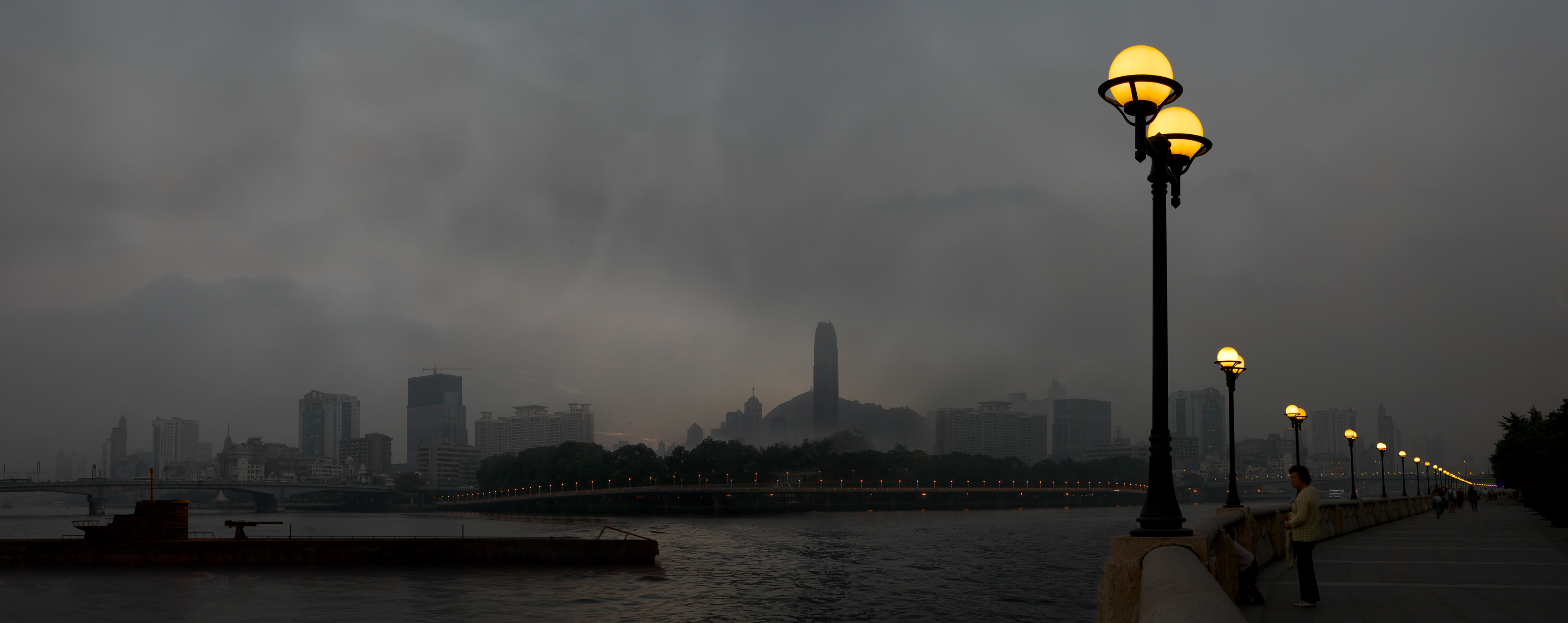
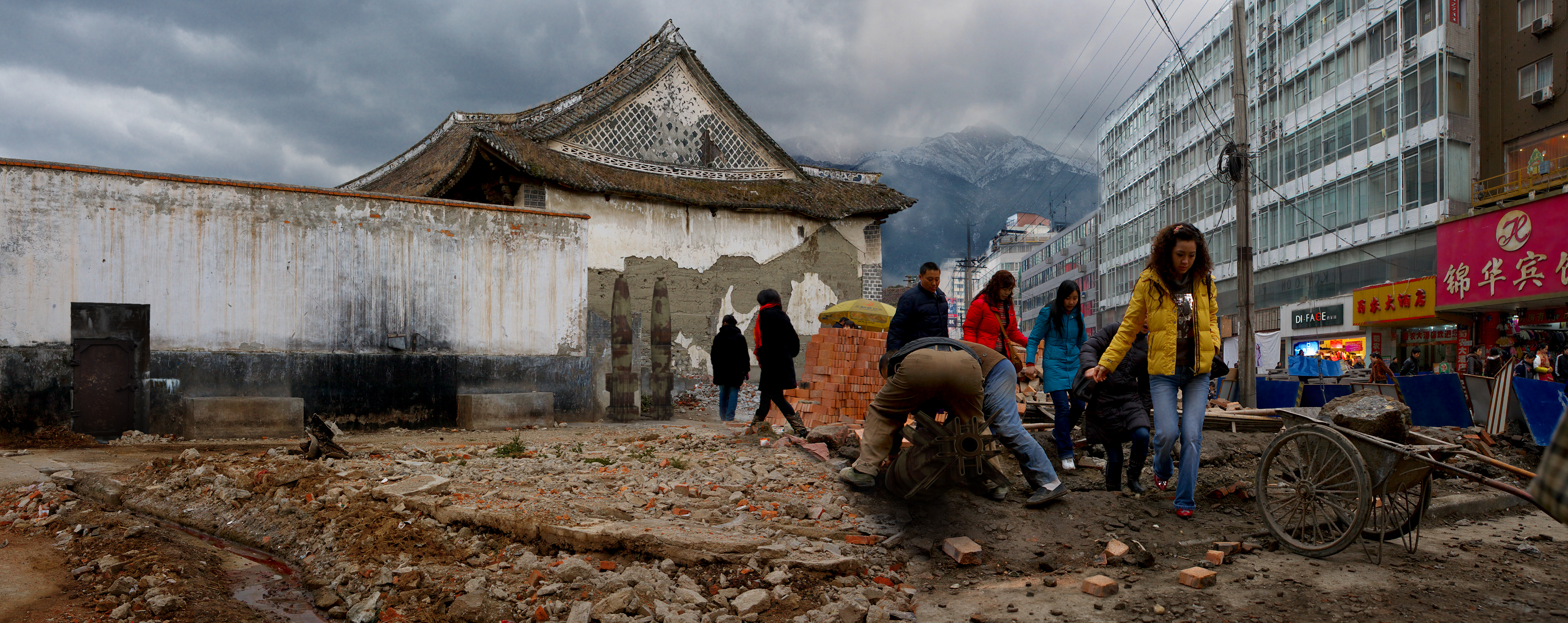
In the spring of 2008, I travelled to China for the third time. The photographic material I collected in six Chinese cities formed the foundation for the series International Panorama vol. 1. Instead of documenting specific locations, this project constructs synthetic urban landscapes from fragments of various places and moments. These digitally assembled panoramas represent environments that do not exist in reality, yet remain entirely grounded in actual urban fabric.
This approach enables the compression and intensification of the city. The resulting images are not realistic views or documentary panoramas; instead, they function as spatial condensations or urban extracts. Additionally, the works incorporate fictional architectural elements and 3D constructions, forming a synthetic city that introduces a subjective and emotional dimension to my interpretation of Chinese urban space.
A central tension in the series arises from experiences of surveillance and restriction. On several occasions, armed guards required me to cease photographing seemingly ordinary urban locations. These encounters generated a persistent sense of secrecy without a clearly defined secret. What began as an ironic anecdote gradually developed into a darker conceptual layer within the work. The city depicted in the panoramas increasingly appeared aggressive and confrontational, introducing motifs of absurd and almost theatrical urban warfare.
Of the ten planned panoramic works, five have been completed to date. These focus on conflict-driven urban scenarios, while the remaining works will address themes of mass society, control mechanisms, and collective anonymity. International Panorama vol. 1 does not seek to predict the future; instead, it constructs a visual field in which existing cities are pushed to their logical extremes. The project aims to engage with the current global condition and, through this engagement, to speculate on the near future of urban life.






© Ott Kadarik
insta: @kodarik @luidrik @ktarchitects